
Book Reviews
Before We Were Innocent - Ella Berman
Two former best friends who were once suspects for their friend’s death are forced to confront their past when a similar crime pulls them back together a decade later…
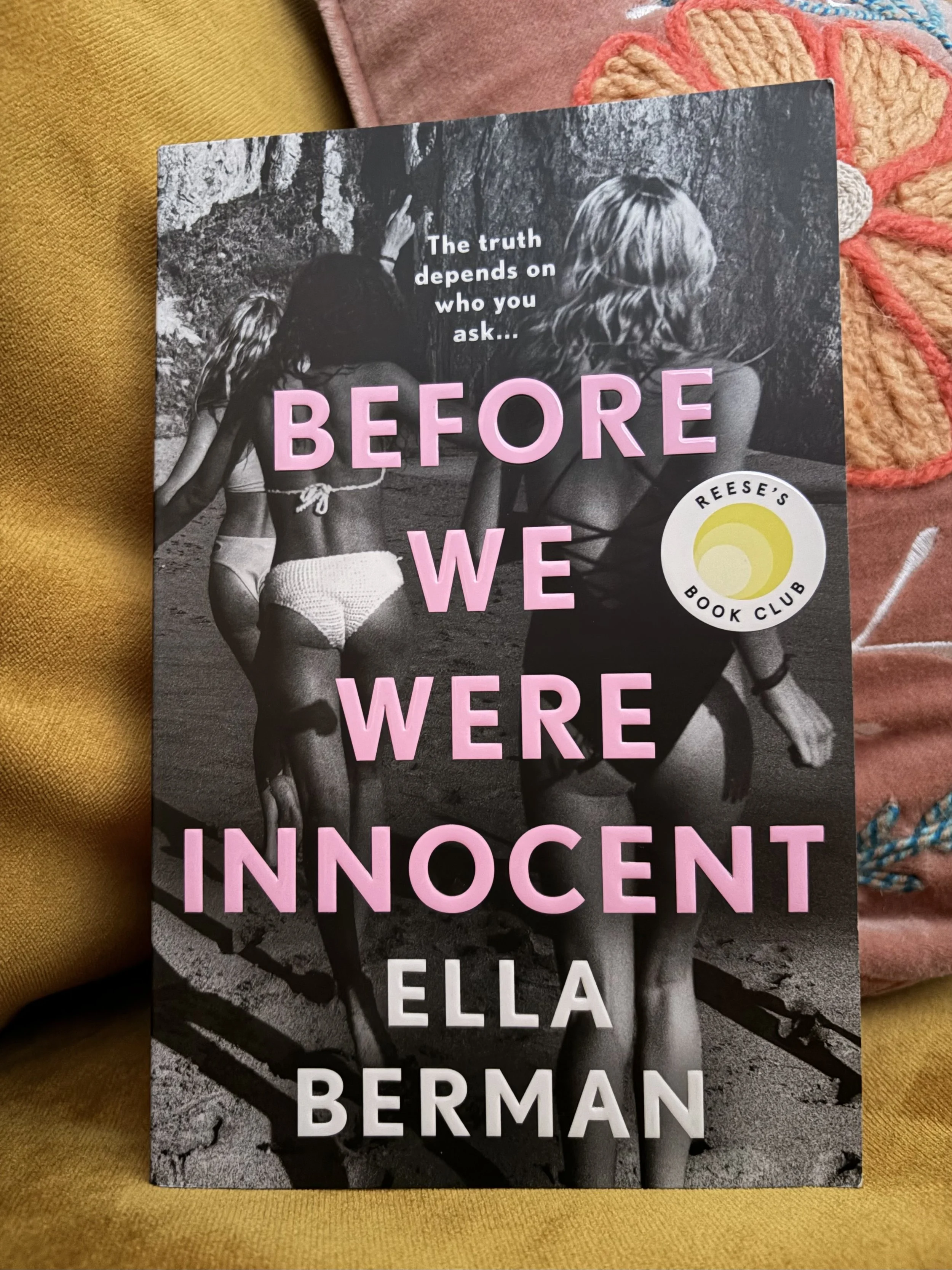
Two former best friends who were once suspects for their friend’s death are forced to confront their past, when a similar crime pulls them back together a decade later. As Joni becomes entangled in new accusations, Bess must decide whether to protect her old friend or finally face the truth about what really happened in Greece all those years ago.
Before We Were Innocent is nothing more than a three‑star read. I didn’t love it, but I also didn’t hate it, and there are a lot of reasons that led me to that middle ground. First of all, the beginning felt messy. Ella Berman wrote two parallel timelines: the present day in 2018 and the past in 2008. As you read, each story unfolds, but they don’t necessarily intertwine very well. This made it confusing to follow during the first chunk of the narrative, and that had me setting a low standard for the rest of the novel.
Though I felt this way initially - and it did sort of ruin the first part of the book for me - I think as the story went on, it started to make sense and was definitely necessary for the reader’s general understanding of what was happening. With that said, maybe Berman didn’t start the story in the right place, or perhaps it would have worked better with a prologue followed by the flashbacks starting at a later point in time. Some of the information in the first few pages wasn’t all that impactful and was extremely hard going.
Subsequently the story was quite flat, and because it wasn’t very eventful but very informational, it just wasn’t that exciting. Most of the book felt like it followed the rule of “tell, don’t show” rather than “show, don’t tell,” and that affected my attention span. When I’m reading, I want to be gripped from start to finish and while I was mildly interested in where the story might land, I wasn’t profoundly engrossed or on the edge of my seat at all. Its lack of exhilaration made it predictable, and I ruined the ending for myself by the midway point.
So, if you’re any good at solving murder mysteries, I’d steer clear of this novel because you won’t get the thrill you’re looking for. Yes, the narrative took some unexpected turns, but they weren’t jolting revelations; more like anticlimactic swivels in a direction not far from what I’d already predicted. Hence why it felt uneventful and a little boring.
Furthermore, losing myself for a week in a world that wasn’t mine was nice, but overall it’s a very fair-to-middling novel without much depth. However, despite all those negatives, there were some positives that I genuinely loved finding throughout the story. Before I list those, I want to make sure I state that Before We Were Innocent definitely succeeds when it comes to addressing societal issues, people’s behaviour, the media, and so much more. The story thrives on its underlying messages and themes to its audience.
Berman explores the complexities of toxic female friendships, the impact of adolescent trauma, the destructive power of secrets and memory, and themes of guilt, betrayal, maturation, and loyalty. This is where the book is both powerful and relatable. I mean, its relatability was the soul reason I kept reading. I was drawn in by relationships that reflected a lot of my own past friendships and romantic experiences. It highlights just how cruel girls can be, and subtly steers young women away from behaving that way; not just with female friends, but with anyone.
This was particularly good to me because as women, we sometimes forget there are healthier ways to communicate than through our insecurities and jealousy. It’s okay to have them, and feel it, but it doesn’t excuse you from being nasty. Berman shows exactly what happens when we act when our emotions are clouding our judgment; it’s heartbreaking, immature, and silly. To see these interactions play out on the page, strengthened my connection to the characters. I knew exactly whether I liked them or not, and exactly why that was. And these themes need to be spoken about because they reveal the ugly truth to people who don’t want to believe they act a certain way. Whether that’s being petty, or rude.
To conclude, considering its core messages, I’d recommend this book because you might learn something from it. Even if you don’t, you’ll definitely find some aspect of it relatable, even if the writing and story aren’t as strong as they could be. And if it really doesn’t tickle your fancy, then rest assured, you wouldn’t be missing out.
Buy your copy of the novel here: