
Book Reviews
Wife - Charlotte Mendelson
Zoe Stamper moves from the intoxicating early days of her relationship with the older, sophisticated Dr Penny Cartwright into the fear‑ridden marriage she later fights to escape…
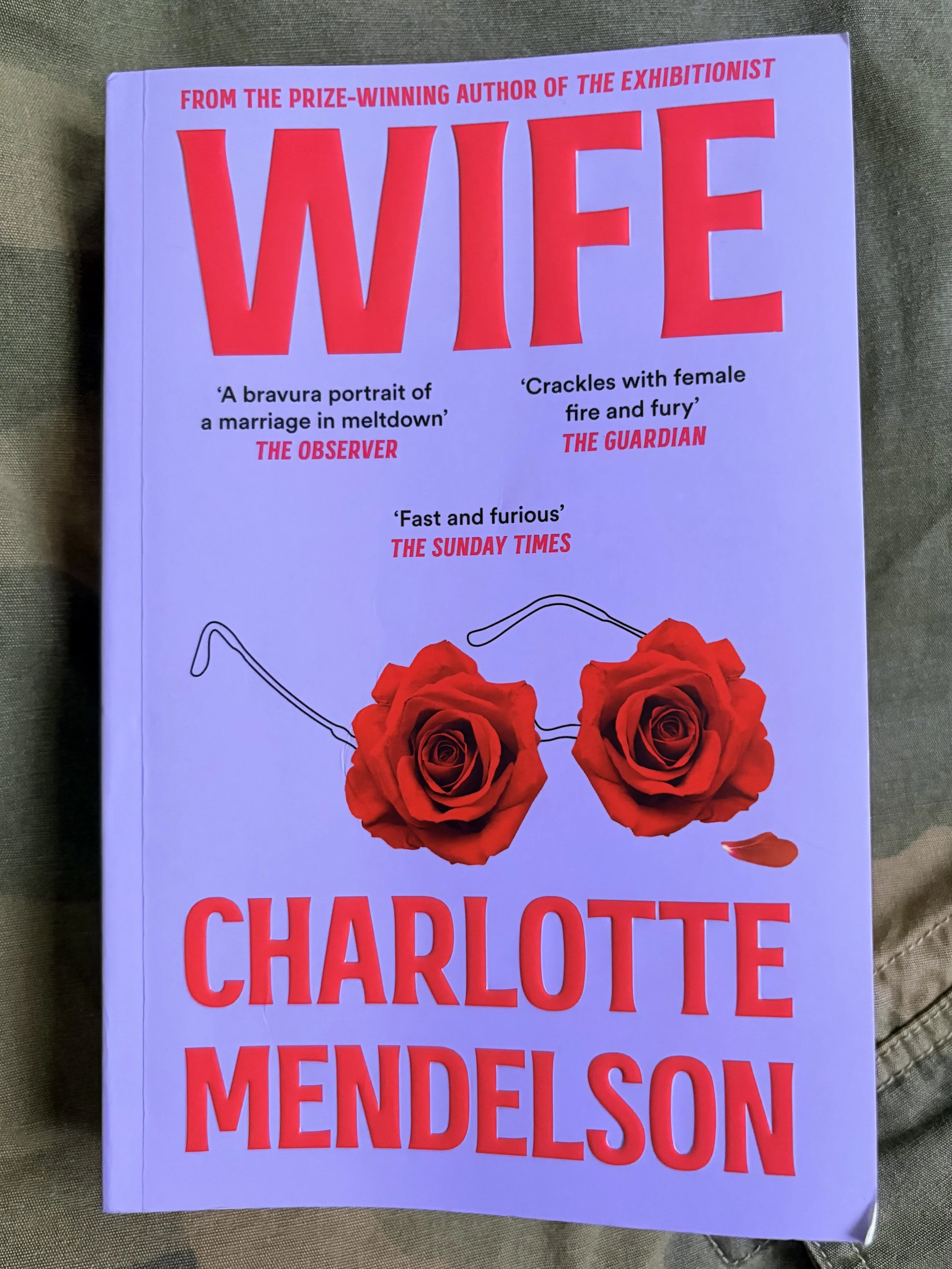
Charlotte Mendelson’s book Wife follows Zoe Stamper, who is swept into an intoxicating, unreachable world when she begins a relationship with the older, sophisticated Dr Penny Cartwright. Years later, trapped in a marriage built on secrecy and fear, she fights to break free in a story that moves between past and present to reveal the horror, humour and suspense of her midlife escape…
And though it sounds thrilling, I can only give it two stars. When I started reading, I had high hopes — maybe I’m biased, being a lesbian who naturally gets excited about lesbian literature — but I was unfortunately, severely let down. This is one of the worst lesbian literature novels I’ve ever read, and here’s why:
For starters, I didn’t like Mendelson’s writing style. The prose feels like constant yapping, it’s like she’s desperate to be funny but the humour never lands. There isn’t really a solid plot line, either, making the whole thing dull, and the random character facts sprinkled throughout add nothing except my growing urge to skim. The book is exhausting — 356 pages of arguments, tangents, and conversations that go nowhere because the same character wins every time.
First, there’s Penny, who is straight‑up manipulative in that “don’t interrupt me, Zoe” way. And Zoe barely speaks, almost never stands up for herself, and somehow manages to be both sympathetic and maddening. I never felt like I truly knew her, but I did repeatedly want to slap some sense into her. Penny, meanwhile, is childish, controlling, and deeply unlikeable. Together, they make an infuriating pair of protagonists who drag the story down rather than carry it. I mean, I questioned almost every decision the characters made — including the side characters — and my frustration grew with each baffling course of action. It’s honestly a miracle I didn’t stop reading halfway through.
Furthermore, the whole back‑and‑forth structure between present and future just didn’t work for me — it felt chaotic, like the book kept yanking me out of one moment before I’d even settled into it. Instead of feeling clever or layered, the jumps made the story hard to follow, and because Mendelson was feeding me soooooooo much information at once, my brain eventually tapped out and started quietly zoning into the void. Half the time I was asking myself why on earth I needed to know any of these random details, and the other half I was flipping back a page trying to remember where we even were in the timeline.
Despite all this, the novel does explore meaningful themes. Mendelson examines power imbalance, showing how Penny’s behaviour shapes every corner of Zoe’s life. The split timeline highlights how a once‑liberating relationship becomes suffocating, and the domestic setting builds a sense of claustrophobia that mirrors Zoe’s emotional trap. And so, at its core, Wife is about how love curdles into control, and how escaping long‑term manipulation requires confronting both your partner and yourself. It’s powerful material — some of which Mendelson handles well and I can see she worked hard to convey — but overall, the execution simply doesn’t live up to the weight of the story.
And on that terrible note, I leave you with some advice of my own: if you want to dive head‑first into a story about a disastrous relationship, relive pure toxicity, or you’re simply curious about how bad this book actually is… go ahead, read it. Otherwise, honestly, it’s not worth the emotional calories. Lesbianism isn’t painted in a good light here at all — instead of celebrating something beautiful and heartwarming, the novel leans into tired, messy tropes we spend every Pride month trying to shake off. Watching it flatten something rich and complex into chaos and misery is just… sad. So yes, while some readers might find value in its darker themes, I strongly advise you to avoid it if that’s not your point of interest.
But just incase, you can buy your copy of the novel here: https://amzn.eu/d/0bfAjISf
The Safekeep - Yael Van Der Wouden
The Safekeep is about Isabel’s journey and her ever-growing connection with Eva, her brother’s girlfriend. When her brother leaves their childhood home for a short business trip, the two girls are left alone for an indefinite amount of time. Their bond deepens, Isabel’s belongings begin to go missing, and a historically rooted emotional truth comes to light. Will it shatter their relationship, or bring them closer together?
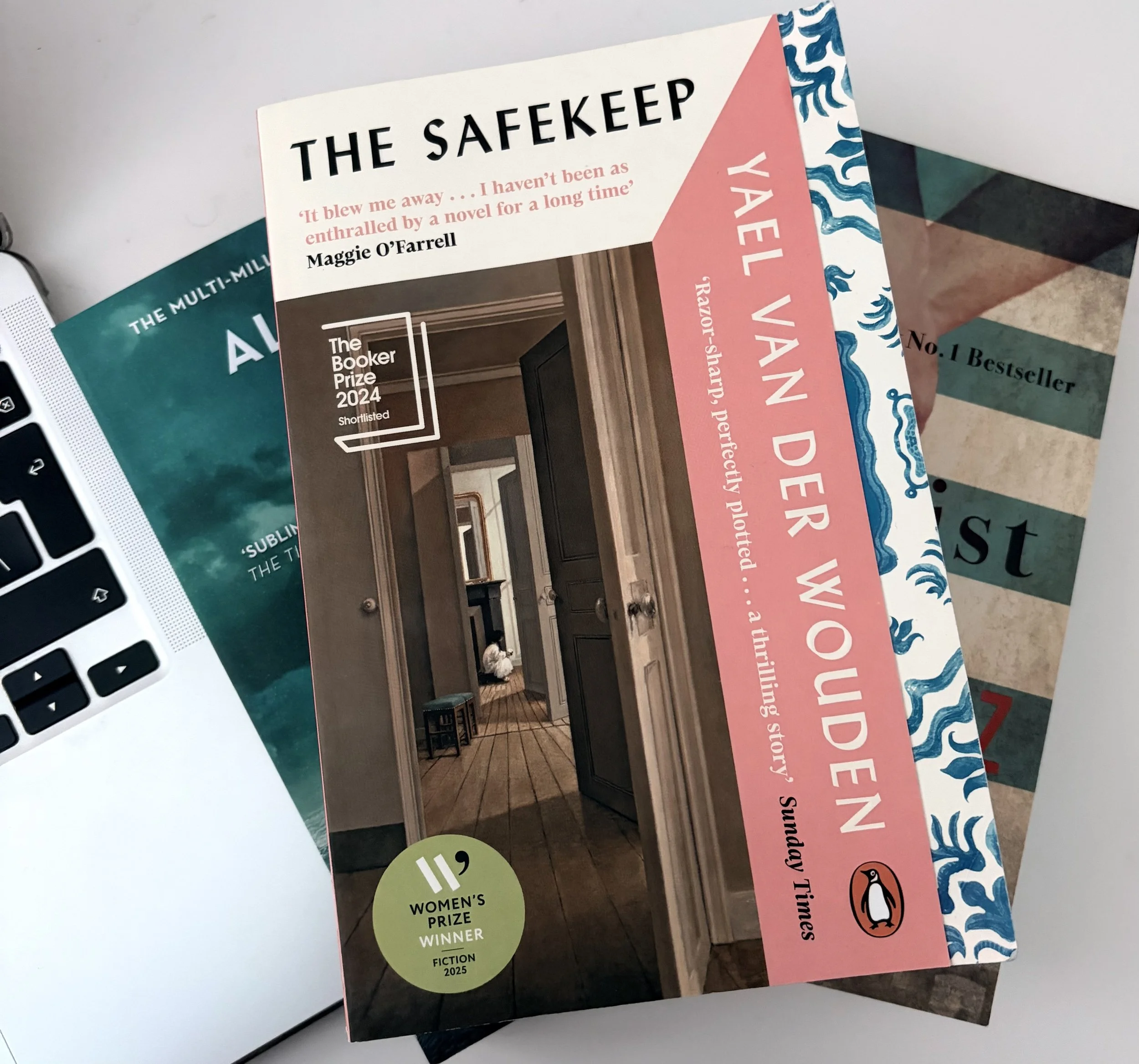
The Safekeep is set in rural Netherlands, specifically Overijssel, around 1961, in the lingering shadow of World War II. The book opens with a gentle introduction to the characters, where we meet Yael Van Der Wouden’s protagonist, Isabel, and her siblings. This ultimately sets the narrative in motion, though it does have a slow build-up before the first major plot points arrive. We follow Isabel’s journey and her ever-growing connection with Eva, her brother’s girlfriend. When her brother leaves their childhood home for a short business trip, the two girls are left alone for an indefinite amount of time. In that space, their bond deepens, Isabel’s belongings begin to go missing, and a historically rooted emotional truth comes to light. Will it shatter their relationship, or bring them closer together?
It’s a story about control, obsession, and the hidden histories tucked inside a house far more complicated than it first appears. And Van Der Wouden does a lovely job of bringing that vision to life.
Initially, I thought the opening was a bit slow. It took me a few days to properly get into it, and at times I wondered whether this book would be interesting enough for me to keep going. But by the time I’d finished the first third, I was proven very wrong. This became an extremely enthralling read, and I found myself invested in both Isabel and Eva’s lives as if I knew them personally — like I was sitting cross-legged on the carpet, listening to them tell me their story.
Historical novels have never ceased to amaze me. I find military history incredibly engaging, and I genuinely want to know about every second of every year the world wars took place. The subject fascinates me, so when I find a novel set in or around wartime, I know I’m going to enjoy it — and I can’t recommend The Safekeep enough. Not only does it touch on the Holocaust and its devastating effects on Jewish lives, it’s also built around a beautiful love story between two women who, at the time, would never have been able to be open about their relationship. It offers insight into what life was like for queer people when their identities were heavily stigmatized. Because of that, it evoked a kind of fear and heartache I don’t always feel when reading contemporary lesbian romance.
Van Der Wouden captivated me with her complex characters, to the point where the story felt almost entirely character-driven — with the house itself acting as a character too. It symbolizes so many things like: memory, and trauma that tie into the book’s main themes: secrets, and the desire for control. It’s a simple story on the surface, but it carries powerful meaning and delivers heart-stopping twists that pulled me even deeper into their world. I wasn’t taken on a chaotic emotional roller coaster; instead, it felt like drifting down a tender, composed river in a gently bobbing boat that occasionally tugged at my heartstrings. Van Der Wouden writes with a calm, steady hand — short sentences that keep the pace flowing, dialogue that feels true to how people actually speak. And with all its unnerving moments, its sensual scenes, and its elegant bursts of description, it becomes a deeply moving piece of writing.
Overall, I’d give this book 4.5 out of 5 stars. It’s a little slow at the start and not immediately captivating, but once the small conflicts begin — the friction between personalities, beliefs, and buried truths — I was hooked and eager to uncover exactly where these women came from. The Sunday Times calls it “razor-sharp, perfectly plotted… a thrilling story,” and I couldn’t agree more. It’s different, it’s steamy, it’s unlike anything else — and it absolutely deserves the praise. I’m so glad I read it, and I hope you are (or will be) too.
To get your own copy of the book, use the link below:
Our Wives Under the Sea - Julia Armfield
Armfield’s novel, "Our Wives Under the Sea," beautifully entwines a tale of love and heartbreak, focusing on two women whose bond is tested by a deep-sea mission that profoundly alters Miri’s partner, Leah…
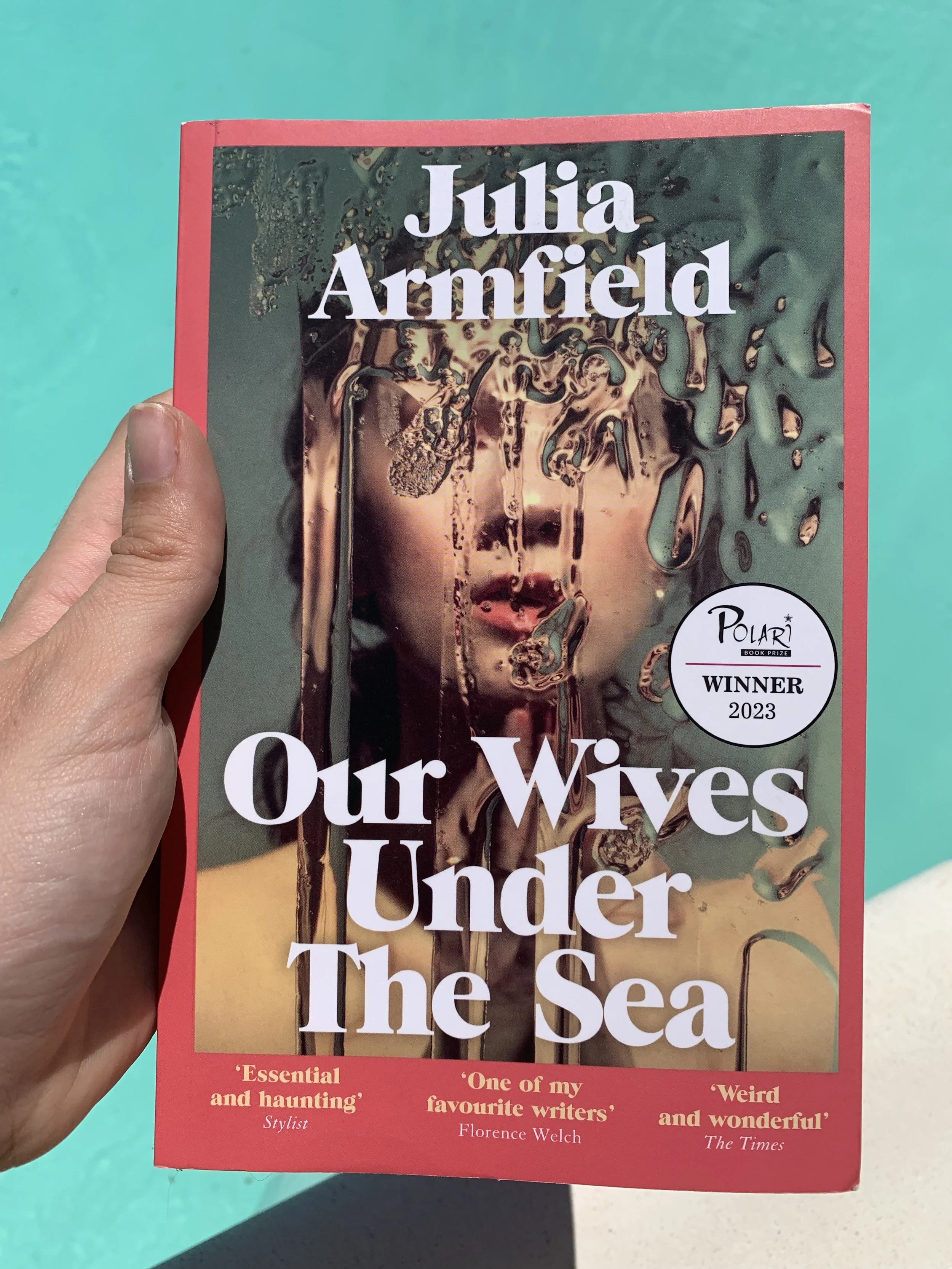
Armfield’s novel, "Our Wives Under the Sea," beautifully entwines a tale of love and heartbreak, focusing on two women whose bond is tested by a deep-sea mission that profoundly alters Miri’s partner, Leah.
What unfolds when Leah descends into the ocean's depths, and how does it ripple through their lives afterward? The story intricately explores the complexities of their relationship, subtly driving them apart as life inserts a wedge between them. To discover the journey this book will take you on, I wholeheartedly recommend reading it; it’s an experience you won’t regret.
Honestly, I was left utterly speechless by this book, mainly because I was emotionally wrecked, but also because Julia Armfield’s writing style completely captivated me. Her storytelling is so seamless and elegant that each chapter effortlessly flowed into the next; the shifts in time never once disoriented me. It was a thoroughly enjoyable read that kept me engrossed from beginning to end. I was deeply moved and genuinely astonished by her incredible imagination and applied research.
Initially, I questioned why The Times described it as “Weird and Wonderful,” particularly the “weird” aspect, but after finishing the book, I completely understood their sentiment. It was indeed weird, bizarre, and uncanny, but that’s precisely what made it so compelling. It was truly exceptional, and I can’t praise it enough. I loved how it delved into every facet of these women’s lives, from their initial meeting to the events unfolding both beneath and above the water. Everything intertwined seamlessly, creating the most potent and enigmatic narrative Armfield could have crafted. I’m craving another book just like it; in fact, I’m eager to read more. I need more, even though I found the ending satisfying and there’s quite a few novels out there with endings that i’d change. The ending of “Our Wives Under the Sea” was precise yet elusive, clear yet ambiguous, all at the same time, which thrilled me. I genuinely believe Armfield knocked it out of the park with this one. I’m so impressed that I’ll be rereading it amidst all the other books on my list.
Armfield’s characters were compelling and believable, so much so that I genuinely disliked some of them; and it’s been ages since I’ve felt such animosity towards characters in a life that doesn’t truly exist. Their thoughts were realistic, their actions understandable, and at times, frustrating. I honestly struggle to find any faults. Armfield crafted a disturbing story infused with the passion of love to ease the pain. It’s a true work of art, and I’ll be recommending it to others for a long time to come.
With that said, if the ocean captivates you, and you’re drawn to queer love stories or seek validation through them, "Our Wives Under the Sea" is the perfect book for you. It’ll only disappoint if you’re not a fan of realistic fiction, romance, or the concepts surrounding deep water exploration and the marine biology that comes with it…because yes, you’ll learn a thing or two, and it’s surprisingly fascinating!
So, if you haven’t already, go grab your own copy of the book using the link below and dive right in: