
Book Reviews
Six of Crows - Leigh Bardugo
Kaz Brekker pulls together six volatile outcasts for a heist so dangerous it could either save the world or destroy them long before they get the chance…
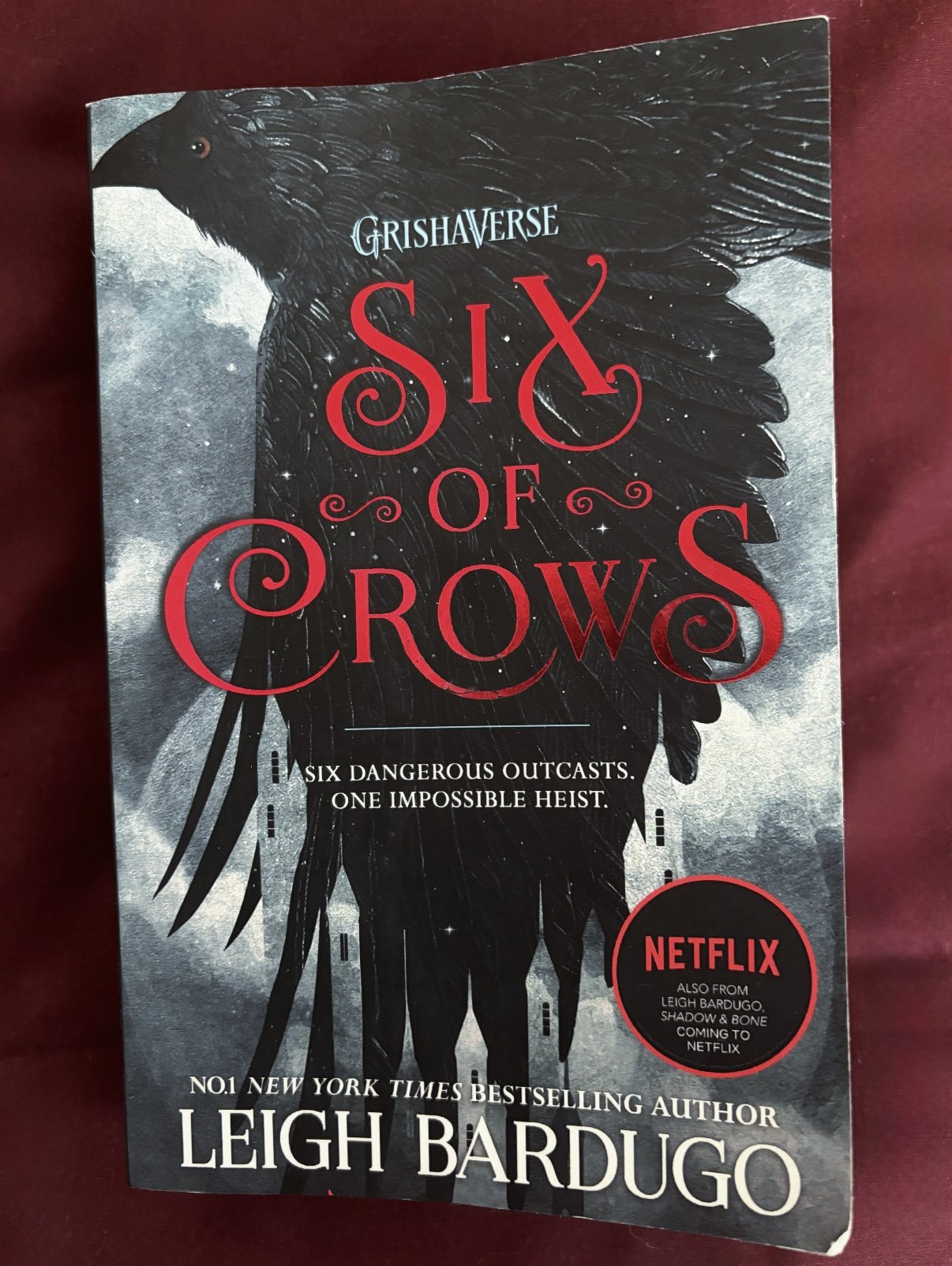
Kaz Brekker assembles six dangerous outcasts for an impossible heist that promises unimaginable wealth but demands absolute trust from a crew built on secrets, grudges, and survival. As their mission spirals toward catastrophe, this team becomes the only force standing between the world and destruction (if they don’t tear each other apart first, that is).
And oh my lord, it sounds as good as that summary sounds! 4.5 stars all round.
To say the least, Leigh Bardugo has written an action‑packed novel that kept my attention for 19 days straight. The GrishaVerse is definitely a world I want to return to. It’s complex, layered, and built with a sense of law and history that goes way deeper than just the world’s surface. And the best part? For all of us who fell head‑over‑heels for this book, it’s only half the journey — the duology means the story keeps rolling long after that brutal cliffhanger. If you know the feeling of finishing a book and craving more, this is exactly the kind of novel you should sink into. I finished it, wandered around like I’d misplaced a limb, then opened Crooked Kingdom and immediately felt restored. Bardugo absolutely smashes this story out of the park.
For starters, the story throws you into this morally messy world full of beautifully damaged characters, and it shows exactly how survival, loyalty, and power end up shaping who people become. Honestly, it proves that even the most dangerous, unhinged characters can form a family when life gives them literally no other option.
And what I thought was really cool — like actually different — is that Bardugo doesn’t bother with the whole “hero vs villain” thing. She’s like, nope, survival makes people do morally grey nonsense, and sometimes the line between necessity and cruelty is basically a smudge. There’s no one good person, no one bad person; they’re all flawed disasters trying to navigate a world that constantly challenges their personalities, beliefs, and trauma. Which, let’s be real, is very much like the world we live in. Nothing wild or unbelievable — just deeply human, deeply moving, and painfully understandable.
Not only do bad people interest me, but they make for way better stories. A virtuously good person who never steps out of their comfort zone, has the same routine every day, and wouldn’t dare cause chaos doesn’t appeal to me in the slightest. But characters as troubled as Bardugo’s? Oh, absolutely. They’re the reason her die‑hard readers kept turning pages like their lives depended on it.
She uses trauma not as some decorative backstory but as an active force shaping every character’s motivations — which, oh my god, is so clever and honestly fundamental to why I enjoyed this book so much. She gives us Kaz’s aversion to touch, Inej’s fractured sense of identity, Jesper’s compulsive gambling — all of it rooted in wounds that actually influence how they behave. This level of detail is exactly what fuels my obsession with both reading and writing.
And yes, it’s a fantasy novel, but she’s written it so well that I genuinely feel like Ketterdam, Ravka, and Fjerda (to name a few places in this world) are real places I could access through some kind of portal. Maybe I’m delusional, but the world is so cool and I loved every single page inside it - with all my heart.
What makes it even better is how the book treats trauma as something ongoing rather than “resolved.” You actually see how healing is slow, uneven, and very personal. It gives the characters emotional depth and makes their moments of trust and connection feel significant, because every step toward vulnerability is a risk. It’s exciting, it’s thrilling, and compared to other books that can feel a bit flat, this feels genuinely otherworldly.
It’s a genre I only dip into occasionally, but I’m so glad I did — and honestly, if fantasy is something you’re thinking about venturing into, start with Six of Crows. It’s simply written — and that’s my only real niggle, since I’m used to richly descriptive prose where similes and metaphors take centre stage. But here, the simplicity feels necessary. It makes the distress land more sharply and reflects the overall harshness of the story. I’ve got loads more fantasy recs I could throw at you, but this one is fresh in my mind and absolutely deserves the hype. It might look complicated from the outside, but it’s genuinely easy to follow, full of adventure, and refuses to let you down. And if it does let you down… I’m sorry, but your idea of fun — or lack thereof — is tragic…
So with all that said, please, please, please read this if you’re even slightly thinking about it. Don’t ask yourself twice. Don’t hesitate. Just do it. It’s the kind of story that yanks you straight out of whatever nonsense the real world is throwing at you and gives you an efficient escape that might submerge you for hours without you realising. And if it helps: on your bad day, Kaz Brekker is probably having a worse one — so you’re in good company.
Get your rebellious side out. It’s dark, criminal, and full of turns that’ll have you on the edge of your seat. It’s like no other fantasy novel; a smart creation that I still can’t quite believe someone came up with in the first place! It’s brilliant.
Buy your copy of the book using this link: https://amzn.eu/d/0deOp0f6
Hot Wax - M. L. Rio
Suzanne spends one brutal summer on tour with her father’s rising rock band and then three decades outrunning its fallout, until Gil’s death sends her chasing the truth she buried and the self she lost…
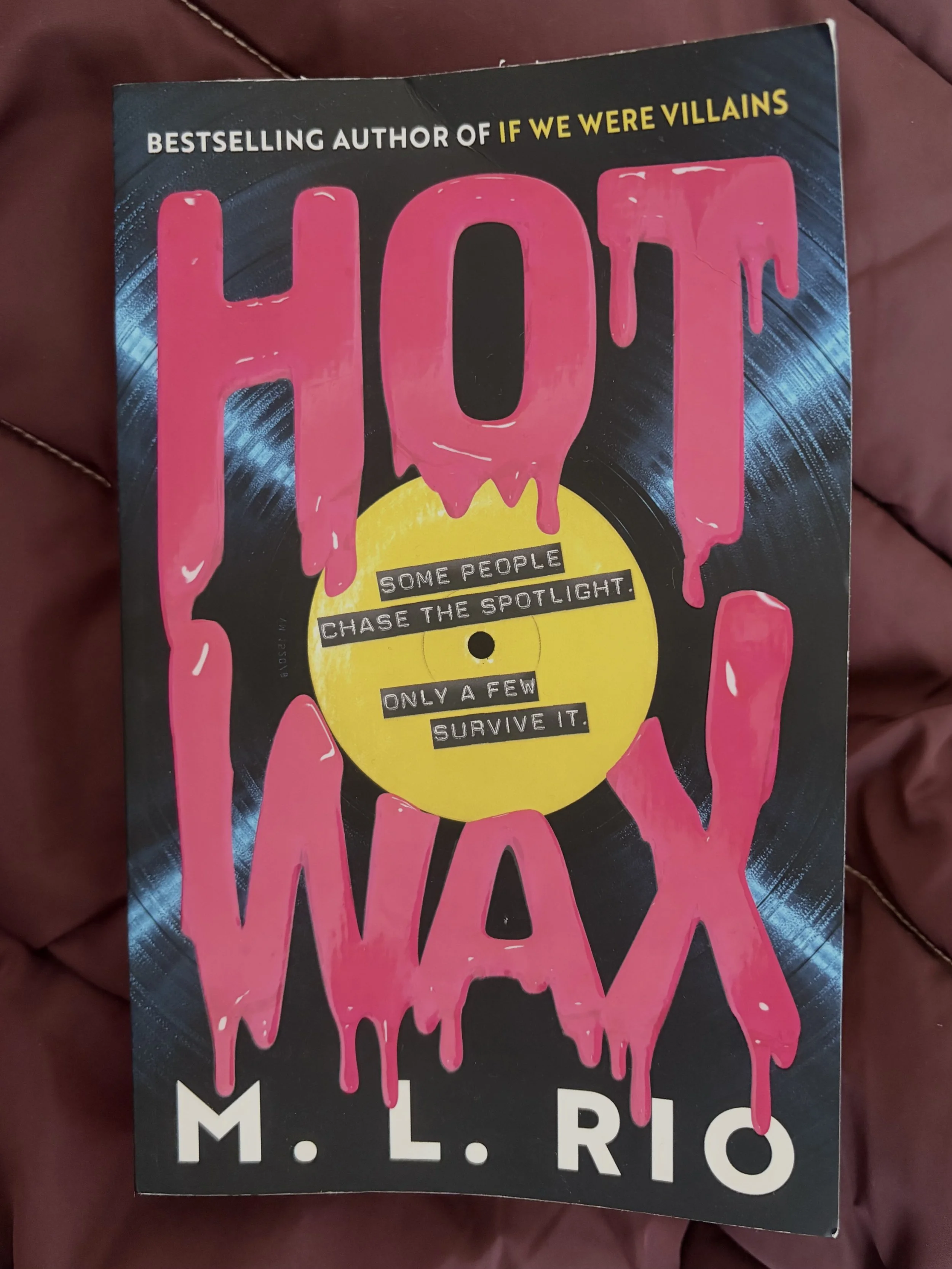
Suzanne spends one brutal summer on tour with her father’s rising rock band, then spends the next three decades trying to outrun its fallout. When Gil dies, she flees her suburban life and goes searching for the truth she buried—only to find freedom, danger, and the version of herself she thought was gone, while her husband hunts her across the country.
Yet despite all that narrative momentum, my reaction to the book itself was… disappointing. All of that left me with one unavoidable conclusion: it’s going straight to my Goodreads DNF shelf — two measly stars, and not a shred of heart left to go back. And it’s made me really quite sad, because M. L. Rio is the writer of one of my favourite books of all time: If We Were Villains, and that book left me on some kind of reader’s high. Which gave me the impression that whatever else she might write was going to be just as gobsmackingly good as that one. Alas, I was very wrong, and it baffles me. How can an author write one stunningly beautiful novel, followed by another one that hits different — and not in a good way.
Now before you mention it, I do own M. L. Rio’s Graveyard Shift. I haven’t read it yet, but the genre and themes are very similar to If We Were Villains, so I have high hopes for it. But as of right now, I cannot speak for it — so all my thoughts on M. L. Rio and her books are solely based on the two I have read.
I feel M. L. Rio overwrote every aspect of this book. To put it bluntly, the plot was very much lost in all the description. As a reader, I can imagine things as I go; I do not need every placement of every object in a living room that Suzanne walks into. I do not need to know every minuscule facet of her life — I should be able to piece together relationships and their type of connection through minimal explanation. A little detail here and a little detail there is fine, but when Rio writes on page 130:
“He looked about nineteen, grinning like the devil he would evidently grow up to be. More disturbing was the family resemblance. He looked just like Suzanne, or she like him. The same deep eyes, the same long lashes. Same ears…”
Yep, I think we get it. This much description wasn’t needed. The man she talks about is Rob — he’s been mentioned before, I already have an image of him in my head and it fits fine with everything else. Why am I rereading stuff that I’ve already depicted? It’s boring.
Not to mention the other quote I tabbed on page 114:
“Suzanne caught flashes of metal, patches of rust, the spokes of an enormous wheel casting shadows on the ground like a sundial turned sideways. What she had mistaken for mounds of earth were the oxidizing skeletons of a dozen broken-down tractors, sinking into the landscape…”
To me, that’s a load of waffle.
The whole book feels like waffle. Almost as though she had to over-describe the narrative scenes because her plot wasn’t strong enough to hold all the weight.
Her characters were fine, but there were too many of them and a little bit cliché. Some of Rio’s character archetypes feel overly familiar, leaning on well‑worn tropes rather than fully surprising or subverting them. In a story that’s begging for messy, unpredictable people, too many of the cast slip into pre‑packaged roles — the tortured genius, the loyal sidekick, the brooding love interest — without ever pushing past their template. It leaves the emotional beats feeling a bit rehearsed, as if the characters are performing the idea of depth rather than embodying it.
Despite those major disappointments, some of her similes, metaphors, personification, and hyperboles were really good and original — poetic and imagery‑building — but there was too much of it. By about page 70, I could only read ten pages at a time without stopping for a break. Reading such tedious, flat writing is hard work. I can’t carry on; I need something that’s going to give me a thrill, maybe something that’s a bit different too. So for my next read, I’m going to be diving into the fantasy genre with the very popular duology Six of Crows. So if you’re interested in that, stay tuned to see whether it’s worth the read or not.
For now, I can’t recommend Hot Wax. It’s like walking through quicksand — the deeper you sink, the harder it is to get through it.
However, I’m not against anyone who might enjoy it if they decide to give it a go. Plenty of people did like it, there’s proof everywhere. It just wasn’t for me, and like my friend Freya Mathieson says “if it’s not serving you, get it out of your life (applies for people as well)”.
Buy your copy of the book here: https://amzn.eu/d/0dLzVPLF
All the Light We Cannot See - Anthony Doerr
Marie‑Laure, blind since childhood, flees the Nazi invasion with her father’s secrets, while Werner, a German orphan with a talent for radios, is pulled into the Hitler Youth and ultimately drawn toward her in a walled city by the sea.
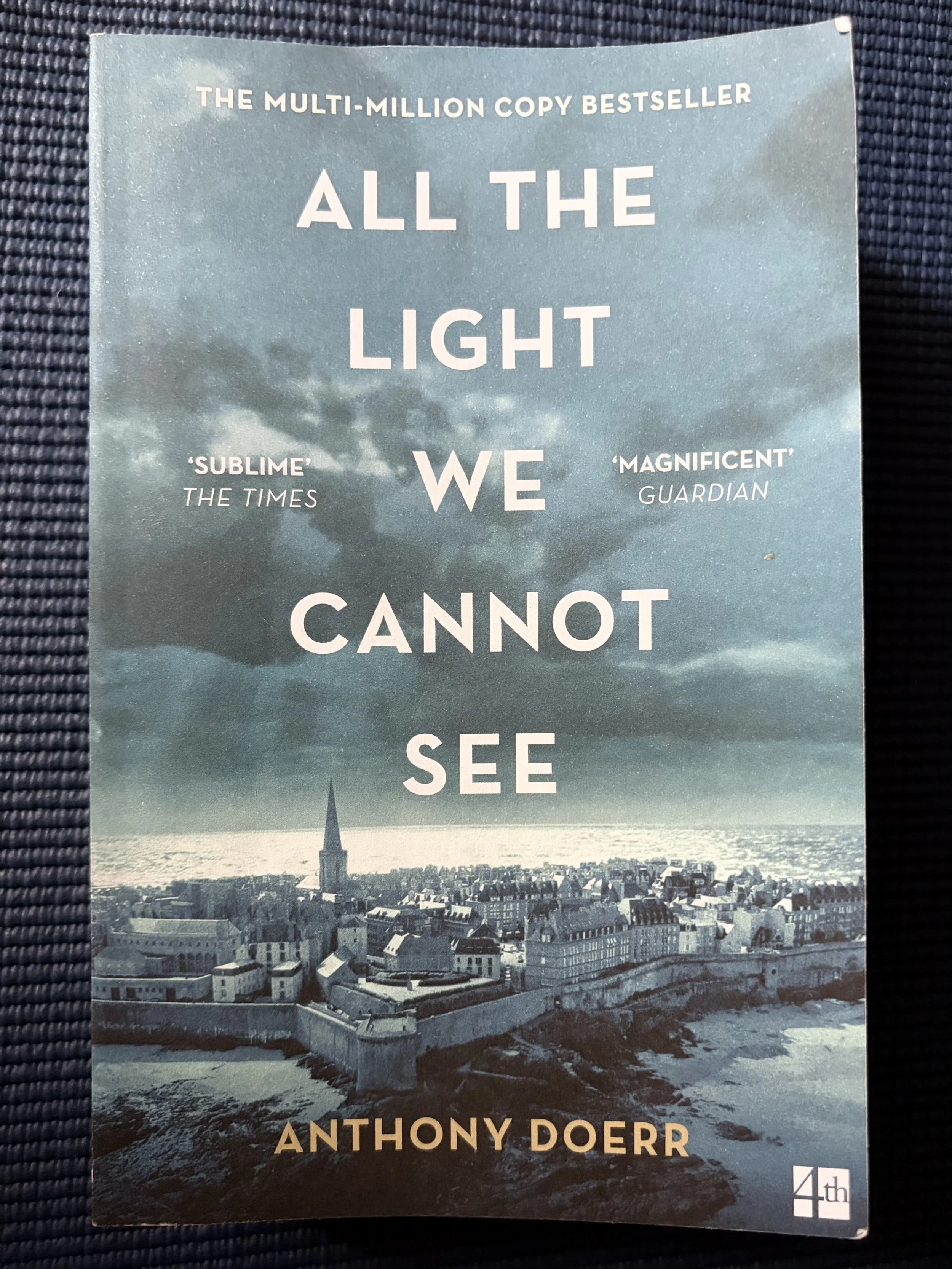
Wow, I have been rendered speechless…which is brilliant for the book but terrible for my blog. Anthony Doerr has written a story where Marie‑Laure, blind since childhood, learns to navigate a world of intricate mazes—from the miniature Paris her father builds to the perilous secrets they carry as they flee the Nazi invasion—while Werner, a German orphan whose gift for radios pulls him from the mines into the harsh ranks of the Hitler Youth, is drawn inevitably toward her in a walled city by the sea.
This review’s a bit shorter than usual because, honestly, the book speaks for itself. It’s a five‑star read that I savoured purely because I didn’t want it to end. And if that brief summary doesn’t catch your attention, I don’t know what will — aside from me relentlessly insisting you need to read it.
It’s devastating, impressive, and downright beautiful. Doerr has mastered the art of showing rather than telling, and his short, sharp chapters make a 544‑page book feel like a breezy afternoon read — unlike those novels with 50‑page chapters that trap you in literary purgatory with no good stopping point and absolutely zero excitement. His scenes snap, the plot moves with real momentum, and the descriptions are so vivid you basically get a free IMAX experience inside your own head.
It’s unbelievable how good this book is, and if you don’t believe me, you genuinely need to buy it, read it, and then try to tell me it’s bad — because I won’t have it. War history is one of my favourite topics, and Doerr delivers an astonishingly human, intimate depiction of WWII through writing that feels both delicate and crushing.
All the Light We Cannot See works because Doerr turns a WWII story into a thoughtful look at how we see the world, how we choose what’s right, and how people stay connected across great distances — essentially whispering, “Maybe seeing isn’t about eyesight.” And what makes this novel unforgettable isn’t just the war setting — it’s the way Doerr turns destruction into an observation of humanity, showing how even in the darkest places, people still search for meaning, connection, and whatever light they can find. I found it so moving.
It’s a novel that will stay with me for a very long time; it tugged at my heart in ways I didn’t expect. I’m not someone who cries over books — I genuinely never have, perhaps I’m cold — but this one pushed me closer to an emotional breaking point than any story ever has.
Buy your copy of the book here: https://amzn.eu/d/04aMJ38Q
Wife - Charlotte Mendelson
Zoe Stamper moves from the intoxicating early days of her relationship with the older, sophisticated Dr Penny Cartwright into the fear‑ridden marriage she later fights to escape…
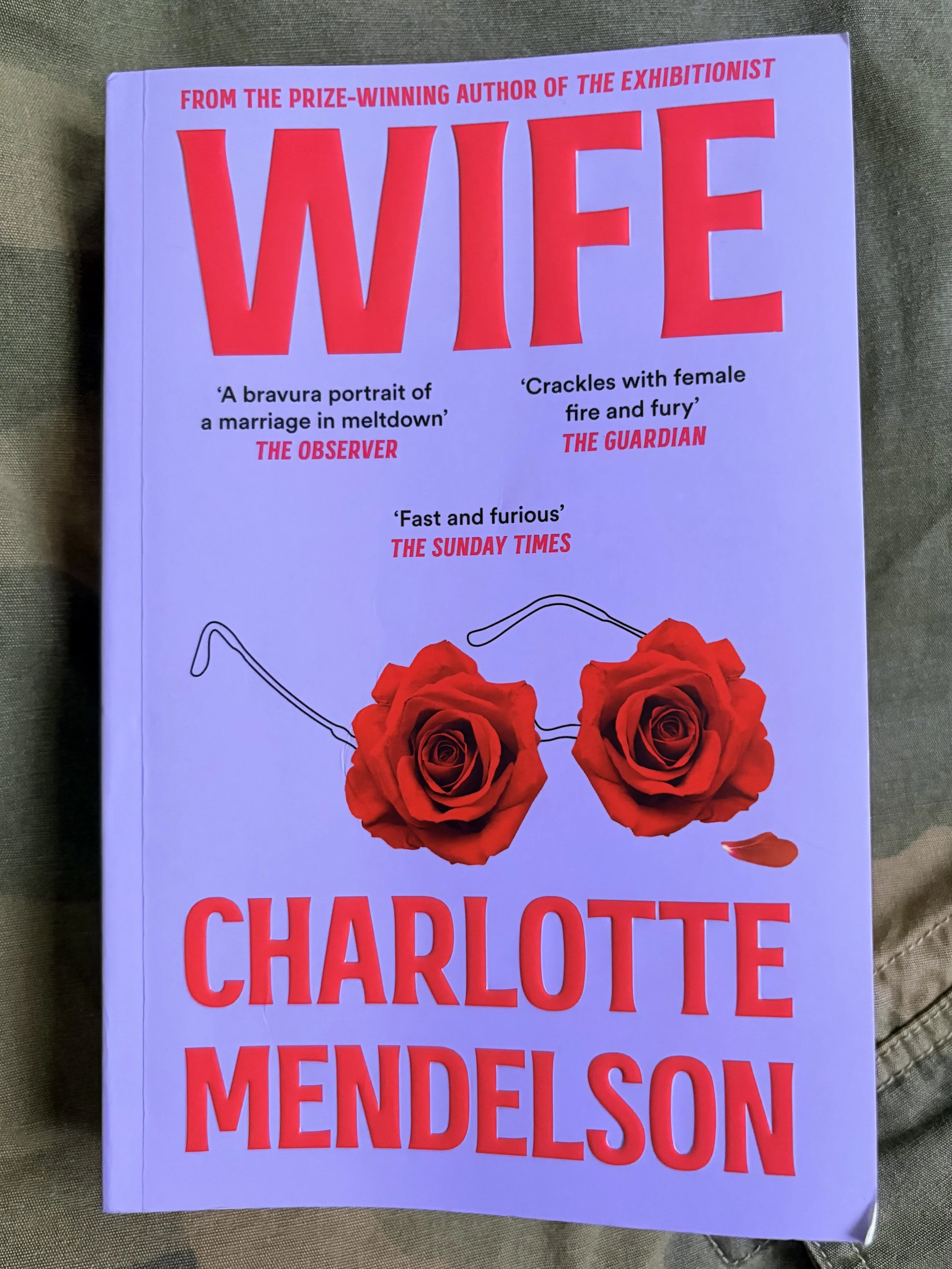
Charlotte Mendelson’s book Wife follows Zoe Stamper, who is swept into an intoxicating, unreachable world when she begins a relationship with the older, sophisticated Dr Penny Cartwright. Years later, trapped in a marriage built on secrecy and fear, she fights to break free in a story that moves between past and present to reveal the horror, humour and suspense of her midlife escape…
And though it sounds thrilling, I can only give it two stars. When I started reading, I had high hopes — maybe I’m biased, being a lesbian who naturally gets excited about lesbian literature — but I was unfortunately, severely let down. This is one of the worst lesbian literature novels I’ve ever read, and here’s why:
For starters, I didn’t like Mendelson’s writing style. The prose feels like constant yapping, it’s like she’s desperate to be funny but the humour never lands. There isn’t really a solid plot line, either, making the whole thing dull, and the random character facts sprinkled throughout add nothing except my growing urge to skim. The book is exhausting — 356 pages of arguments, tangents, and conversations that go nowhere because the same character wins every time.
First, there’s Penny, who is straight‑up manipulative in that “don’t interrupt me, Zoe” way. And Zoe barely speaks, almost never stands up for herself, and somehow manages to be both sympathetic and maddening. I never felt like I truly knew her, but I did repeatedly want to slap some sense into her. Penny, meanwhile, is childish, controlling, and deeply unlikeable. Together, they make an infuriating pair of protagonists who drag the story down rather than carry it. I mean, I questioned almost every decision the characters made — including the side characters — and my frustration grew with each baffling course of action. It’s honestly a miracle I didn’t stop reading halfway through.
Furthermore, the whole back‑and‑forth structure between present and future just didn’t work for me — it felt chaotic, like the book kept yanking me out of one moment before I’d even settled into it. Instead of feeling clever or layered, the jumps made the story hard to follow, and because Mendelson was feeding me soooooooo much information at once, my brain eventually tapped out and started quietly zoning into the void. Half the time I was asking myself why on earth I needed to know any of these random details, and the other half I was flipping back a page trying to remember where we even were in the timeline.
Despite all this, the novel does explore meaningful themes. Mendelson examines power imbalance, showing how Penny’s behaviour shapes every corner of Zoe’s life. The split timeline highlights how a once‑liberating relationship becomes suffocating, and the domestic setting builds a sense of claustrophobia that mirrors Zoe’s emotional trap. And so, at its core, Wife is about how love curdles into control, and how escaping long‑term manipulation requires confronting both your partner and yourself. It’s powerful material — some of which Mendelson handles well and I can see she worked hard to convey — but overall, the execution simply doesn’t live up to the weight of the story.
And on that terrible note, I leave you with some advice of my own: if you want to dive head‑first into a story about a disastrous relationship, relive pure toxicity, or you’re simply curious about how bad this book actually is… go ahead, read it. Otherwise, honestly, it’s not worth the emotional calories. Lesbianism isn’t painted in a good light here at all — instead of celebrating something beautiful and heartwarming, the novel leans into tired, messy tropes we spend every Pride month trying to shake off. Watching it flatten something rich and complex into chaos and misery is just… sad. So yes, while some readers might find value in its darker themes, I strongly advise you to avoid it if that’s not your point of interest.
But just incase, you can buy your copy of the novel here: https://amzn.eu/d/0bfAjISf
Carmilla - Joseph Sheridan Le Fanu
A sudden carriage crash brings the entrancing Carmilla into Laura’s secluded world, igniting a strange, seductive friendship that quickly turns vampiric.
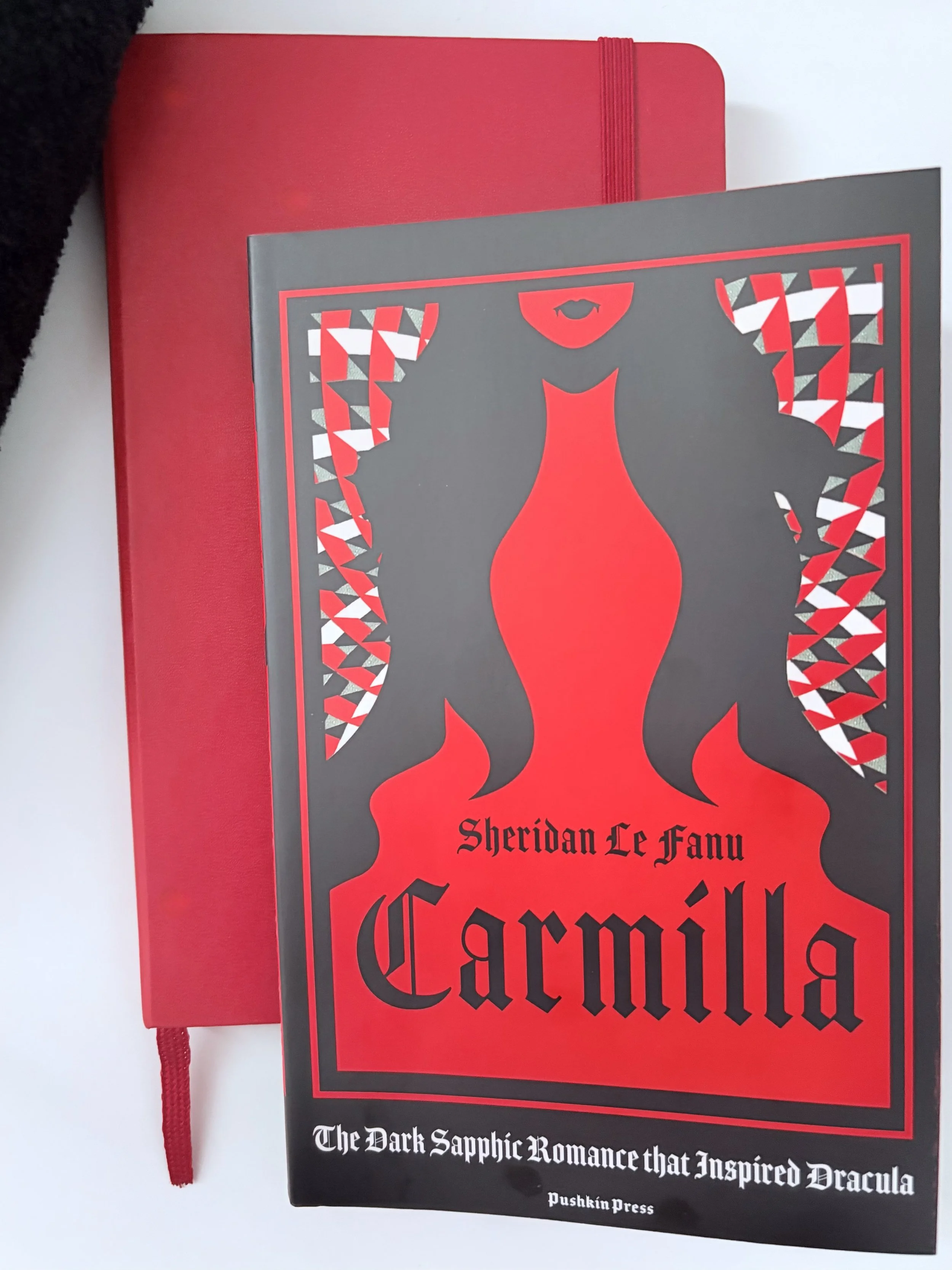
Laura’s isolated life in a remote Austrian castle takes a wild turn when a carriage accident drops the enchanting Carmilla on her doorstep, sparking an intense and eerie friendship. As Laura grows weaker and Carmilla grows stranger, the story unfolds into a seductive, gothic vampire tale that won’t let you down.
Now, I’m taking a different approach with this review, as the book stands apart from anything I’ve read before. I want to unpack this as best I can because boy does it deserve the attention. Apologies if it’s essay-like, my tiny mind has a lot to say.
I don’t usually read horror classics, and I rarely enjoy traditional classics in general, but Sheridan Le Fanu’s Carmilla completely surprised me. It’s extraordinary and captivating from the moment I sat down with it. Unlike many other older novels such as Frankenstein or The Great Gatsby, Carmilla is genuinely easy to read despite its dated phrasing, both in description and dialogue. I was thrilled by this, because I cannot stand when a book forces me to stop and decode every single sentence. I simply don’t have the energy for that, and the story ends up slipping away from me, which feels like such a loss.
I love stories. I want to understand them, to be immersed in the worlds authors work so hard to create. But that becomes impossible when I’m faced with lines like this from Mary Shelley’s Frankenstein: “It was the secrets of heaven and earth that I desired to learn; and whether it was the outward substance of things, or the inner spirit of nature and the mysterious soul of man that occupied me, still my enquiries were directed to the metaphysical, or in its highest sense, the physical secrets of the world.” (p. 39). It’s beautiful, I can’t deny the power of the language, but I still find myself pausing, trying to fully grasp what Shelley means before I can move on. The flow breaks. The experience becomes stop‑and‑start, and eventually frustrating.
That leaves me with two choices: either I give up because I’m tired of not understanding, or I push through and finish a story that ends up meaning nothing to me because the language kept me at arm’s length. That’s not to say I don’t appreciate classics though—they’re the original foundations of so much modern storytelling, and I truly believe the world needs them. Their themes and messages are powerful in ways few contemporary works can match. But Carmilla stands out because it lets me enjoy those timeless qualities without making me fight the prose to get there.
So, without a doubt, Carmilla is one of the prettiest novels I’ve read - if you can call a book pretty? I think you certainly can, and if you give this one a whirl you’ll understand the vibe.
Carmilla is basically the queen of the Female Gothic, and honestly, she knows it. The whole story takes place in super domestic, feminine spaces—castles, sickrooms, cosy little drawing rooms—and somehow Le Fanu has made it all absolutely terrifying. I had chills. It was strange. I was horrified. Carmilla and Laura’s relationship is the perfect mix of “aww that’s sweet” and “oh god she might kill you,” which is exactly the kind of emotional whiplash I think a Female Gothic thrives on. And underneath all that lace and candlelight is a very real critique of how vulnerable women were in a patriarchal society. Basically: men are useless, women are in danger, and the vampire is the only one getting things done.
Then, obviously, my favourtie feature - in honour of Pride month, again: Le Fanu kindly provided us with queer subtext, which - if i’m being honest - isn’t even subtext half the time. Carmilla is out there making heart eyes at Laura, and Laura is quite understandably, confused, flattered, and mildly dying. It’s one of the earliest vampire stories (origninally published in 1872) to openly explore same‑sex desire, and it does it in that classic Victorian way where everything is both deeply romantic and deeply repressed. It was a beautiful experience reading it. Carmilla’s affection is tender one moment and predatory the next, which creates this delicious tension between lust and danger. It’s like the book is whispering, “Being gay is beautiful… but also maybe deadly… but also beautiful again.” And because of this captivating back‑and‑forth, I ended up getting this weird ASMR effect from the writing during the more intimate scenes. Books rarely give me physical sensations, but this one? It was like the words were literally whispering to me. I swear I could feel Carmilla’s eerie yet lascivious presence in my own bedroom, which is not something I was emotionally prepared for on a Saturday night.
It’s safe to say I was freaked out by Le Fanu’s protagonist, but at the same time I was completely absorbed by her beauty and that unnerving sense of calm she carries around like a perfume. She terrified me, enchanted me, and honestly? I didn’t know whether to run or offer her a cup of tea.
And as if all that wasn’t enough to get me excited about a classic novel that I did in fact doubt I’d enjoy before I bought it; there’s the whole vampirism side to it and it’s brilliant hidden metaphor, which is basically a buffet of symbolism. You want repressed sexuality? It’s there. Illness? Absolutely—Victorians loved a good tragic cough. Fear of the foreign “other”? Yep, Carmilla literally strolls in from nowhere and everyone panics. Carmilla isn’t just a vampire; she’s the embodiment of every Victorian anxiety rolled into one very pretty, very chaotic woman. And honestly? She slays. Literally and poetically. I honestly couldn’t be more into this life than I already am.
Finally, with all that said, I definitely think you need to read this. It’s not a long novel — just 156 pages — but it’s jam‑packed with greatness.
Buy your copy of the book here: https://amzn.eu/d/0beXiP2n
Thirst Trap - Gráinne O’Hare
Three young women in Belfast are doing everything they can to outrun the grief and truth of the accident that stole their fourth friend a year earlier.
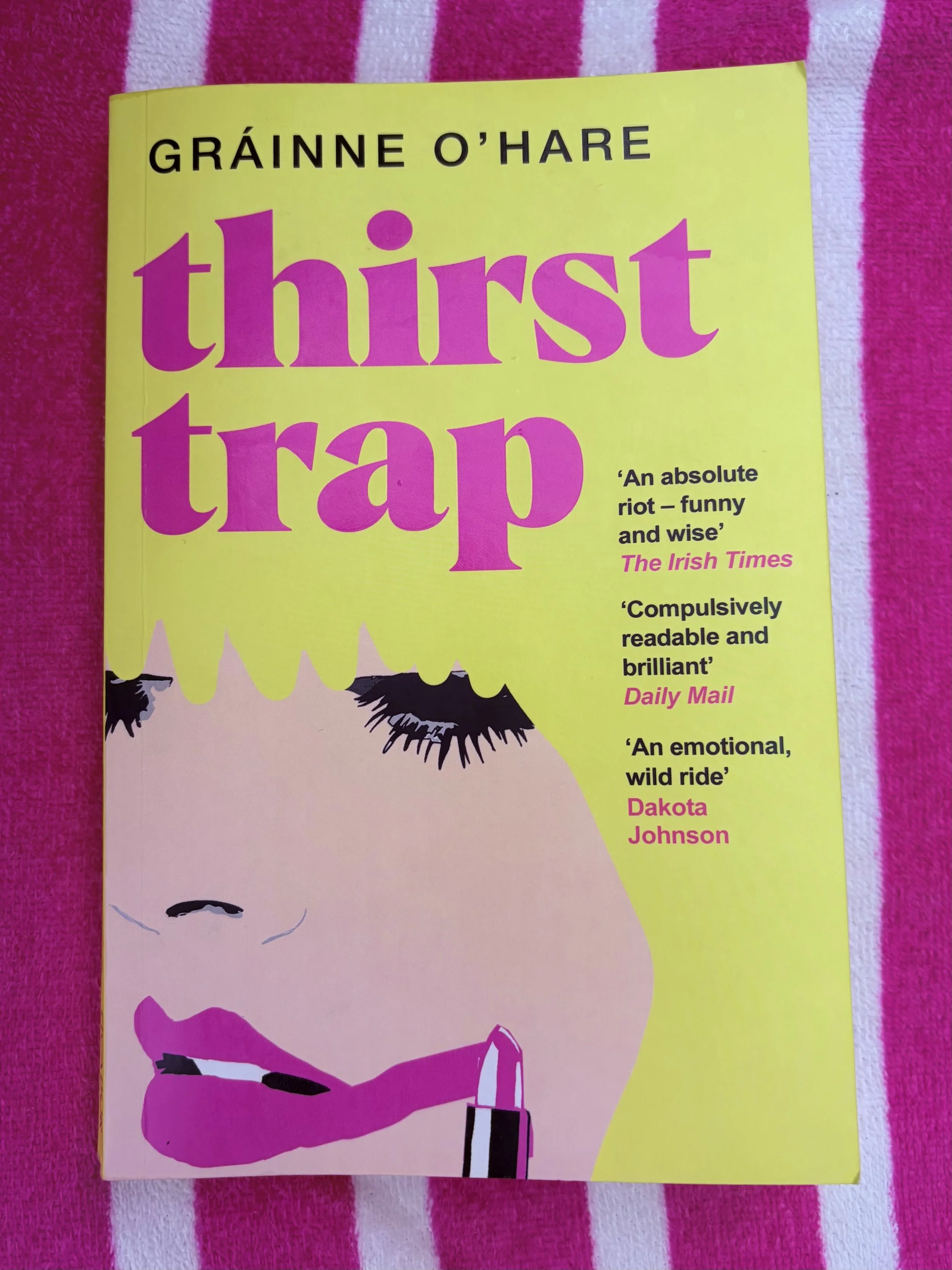
If this book were on a 0–5 scale, I’d give it a 10, because numbers are fake and so are rules.
Three young women in Belfast are partying, deflecting, and stumbling through messy love and work lives, while avoiding the grief and guilt of losing the fourth member of their once‑inseparable friend group. A year after the accident, they’re still running from adulthood, the future, and the truth about what happened.
Now…where to begin? Gràinne O’Hare’s writing is so good it should be illegal. The prose? Gorgeous. The humour? Sharp enough to cut me. The characters? Chaotic little disasters I would absolutely follow into poor decisions. It’s a chaotic yet blissfully beautiful story, written in a humorous way without ruining the tragic parts of the narrative. Honestly, I can’t think of a better way this could’ve been written. Gràinne O’Hare has outdone herself — I loved every bit of this novel, from the first word to the last.
O’Hare’s writing style blends the perfect prose elements together, concocting this compelling book that had me turning every page, pulled through her characters’ lives like I was a magnet and the pages were sheets of iron. I also loved how raw she painted each of the girls’ lives, and how believable they all were — painfully believable at times, which is my favourite kind. She was just so descriptive, interweaving funny metaphors and idioms to keep me engaged alongside the characters’ thoughts, and all their super interesting relationships with all the different side characters O’Hare put in there to move the story along. Ugh…it was just brilliant.
It’s sharp and contemporary, which I always admire, and very Belfast‑specific… which also seems to be something I’m naturally drawn to. There’s something about Irish writers that pleases me more than anything, and I’m not sure if it’s because Irish culture is foreign to me — I’ve never been to Ireland — and the way it’s depicted completely enraptures me; or if I simply love the personalities of these writers, which shine through their novels with an obvious amount of their heart and soul in every phrase and clause. Perhaps it’s both, but either way, I can’t get enough of it, and I will be reading this again.
Aimée Walsh and her book ‘Exile’ (a review on that can be found much further back on my book review homepage) was the first Irish novelist I read, and Gràinne O’Hare certainly won’t be my last… not after reading the masterpieces these two have created.
Not to mention O’Hare’s character work, which is incredible. Her protagonists are flawed, deeply human, and — if I’ve said this word before I’m sorry — chaotic. I love a character who just lives their life brazenly with all the emotion. It’s what keeps me reading a lot of these Contemporary, Humorous/Dark Comedy, and LGBTQ+ / Sapphic Fiction books. If I don’t like a character, for whatever reason, you’ve lost me at page one, to be honest. I want to feel excited by them, I want to dislike them for some of the human decisions they make, and I want to feel like I know them — and O’Hare’s Thirst Trap does just that.
From the start, I knew these girls had troubled lives, and that alone gave me the desire to know more. Can you tell I love a good disaster?
Furthermore, I want to share my love for female‑driven novels. A lot of the things I write are from female perspectives, and sometimes I pick up a book solely because I want to read about the lives of women. I’m often disappointed when a book is written from a male point of view. I love and relate to women a lot more than I do men, and I’m sure a lot of other girls and women out there do too — and this sort of book nails that desire on the head. It’s perfect for getting lost in a woman’s world, and because of that, I’ll be reading it again in the near future for both validation and pure enjoyment because why not?
So, if you love messy women, Irish humour, and emotional chaos, this is your book, honey. It’s perfect for anyone who feels a lot but uses jocularity to get through it — basically, anyone who wants something they can genuinely connect with while still feeling a little bit of warmth along the way. I mean, I felt for these girls the whole way through this short portion of their lives, and I found myself rooting for them and getting riled up at every bit of mistreatment they faced. If that’s not a sign telling you Thirst Trap is definitely a good book to invest in, then I don’t know what to tell you…
Buy your copy of the novel here!: https://amzn.eu/d/0aUqaj5T
No seriously…buy it. Please.
The Lost Passenger - Frances Quinn
Elinor Coombes survives the Titanic disaster and uses the tragedy to vanish with her son, but struggles to build a new life and keep their secret buried.
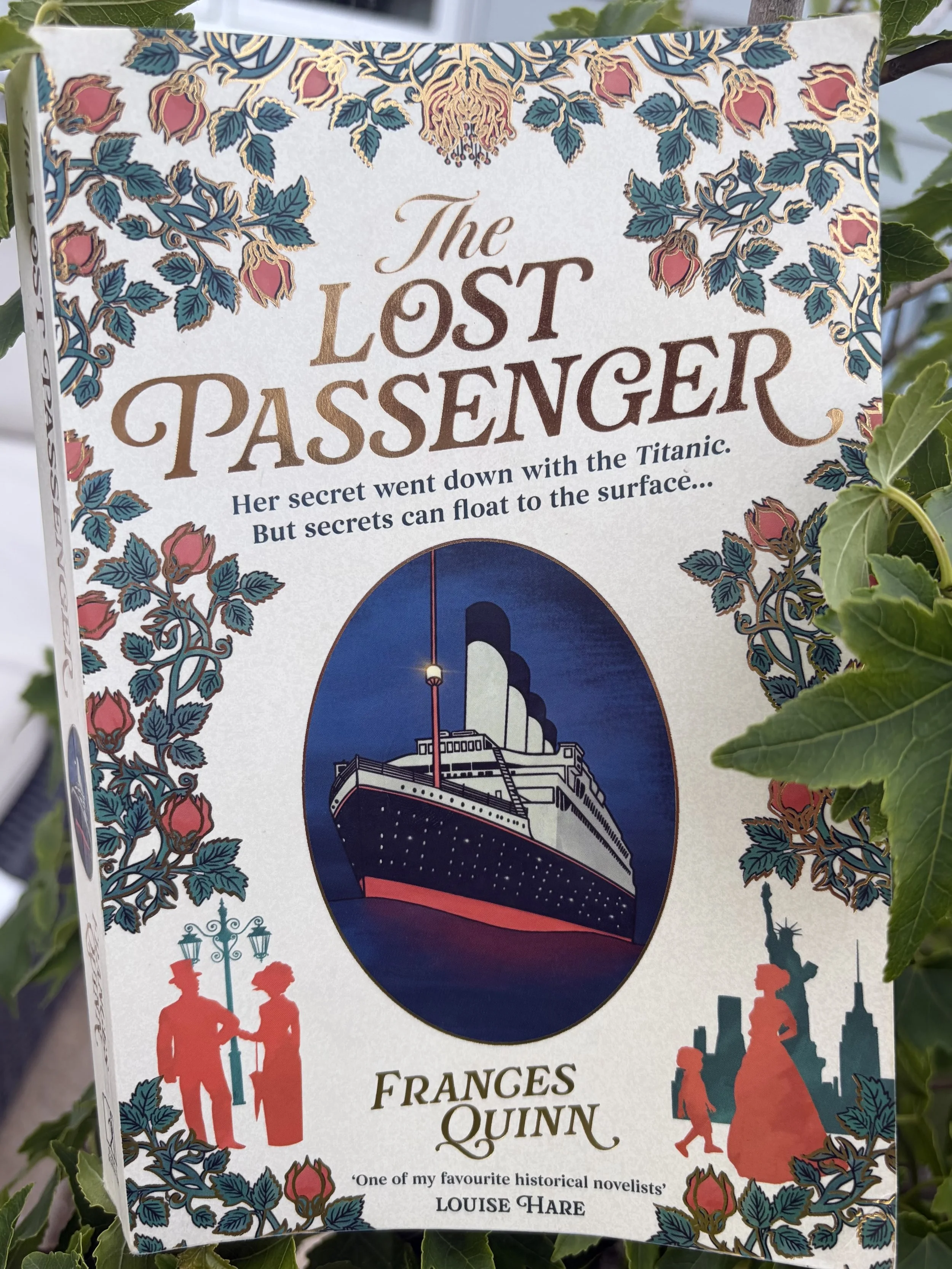
Elinor Coombes escapes her oppressive marriage by boarding the Titanic, but when the ship sinks, she seizes the chance to reinvent her life by letting the world believe she and her son died. Now living under another woman’s identity, she must navigate poverty, protect her child, and keep their dangerous secret from resurfacing.
This is a book about class and misogyny, bravery and resilience, a world‑changing historical event, and the harsh truth behind keeping secrets too big to be kept. I liked it — but I didn’t love it.
Anyone who knows me knows that I’m a massive fan of James Cameron’s Titanic, partly because I’m a little history buff about it, but also because of both its fictional love story and its devastating depiction of the real disaster that occurred on April 14, 1912. (If you’re unfamiliar with this event, I strongly advise doing some research and perhaps watching the film.) But more importantly, I suggest reading this book — and any other that covers the tragic scenes of that night. One: it’s fascinating. Two: you’re in for a truly emotional ride so you’re gaurenteed a bordom free read. Three: it’s a story that should never be forgotten.
In The Lost Passenger, Frances Quinn has spun her own version of that unfortunate night in a simply written prose novel that serves as a gentle reminder of Titanic’s story, sandwiched between the narrative of her character Elinor Coombes — and that story is compelling in its own right. However, Quinn’s writing style was not to my taste. I found it flat, and apart from the extremely short portion of the book that actually covers the Titanic’s sinking — which was disappointing too — it felt uneventful and anticlimactic.
There were some genuinely hair‑raising scenes that bring the narrative together, but she let them down by giving them a lack of excitement, thrill, and real sense of danger. Most things turned out to be fine in the end — initially presented as deeply detrimental but resolved very quickly with zero consequences — leaving many scenes underwhelming. Quinn also relied on a lot of cliché metaphors, similes, personifications, and idioms which were effective but not overly engaging, and this didn’t give the novel much depth — hence me calling it a “simply written prose novel.” And before you come at me, I know it sounds mean, but her writing was pretty basic. It was readable, with a few scenes sprinkled throughout that got me reading quicker, but the prose surrounding said scenes were drawn out and boring. So I wouldn’t say The Lost Passenger is an enthralling read, it’s just a nice read for if you don’t want to rush, and are interested in what life was like back in the early 19th Century.
With that said, Quinn’s knowledge and the research she put into executing this book were excellent. I could tell she cared deeply about the subject she was writing and was passionate about getting it right — creating characters who felt real, and depicting locations as they genuinely were. And I do like a good historical novel — it completely removes you from modern‑day shenanigans and places you in a world you’ll never get to go back to, but one that did, at one time or another, exist. This is, of course, bearing in mind that it’s a realistic historical novel and not, say, a fantasy set hundreds of years ago in a fictional country like Game of Thrones. So, I think Quinn deserves a lot of praise for her handling of that genre. It’s stunning work, honestly.
If you’re a historical‑novel fan, you should absolutely give this one a go — even if it’s solely because you’re interested in the history behind it rather than the story of a headstrong woman navigating a life she hates, all the way through to one that feels foreign to her but so right for reasons I’ll let you decide are justified or not. You may just find yourself in a silent battle with Elinor, but isn’t that what makes a book just that little more capivating?
Even though I say that, and that in itself sounds positive, I’m going to leave this book at a solid three stars. I don’t think I’ll reread it anytime soon, but it was a different kind of escape from what I’m used to, and it offered a good story with strong messages — and in a novel, that’s all I really ask for, for it to be considered good on my book-o-metre. Though, if you prefer more vivid imagery, something a bit more poetic and unique, I wouldn’t pick this up just yet. There are far more historical novels in the ocean; you’ve just got to look — as will I while I embark on my next read!
Do what you will with this one, and enjoy it… it’s lovely, really.
Buy your copy of the book here: https://amzn.eu/d/02toTbcW
Bad Queer - Gayathiri Kamalakanthan
Surya enters their final school year unsure whether Blessing sees who they truly are.
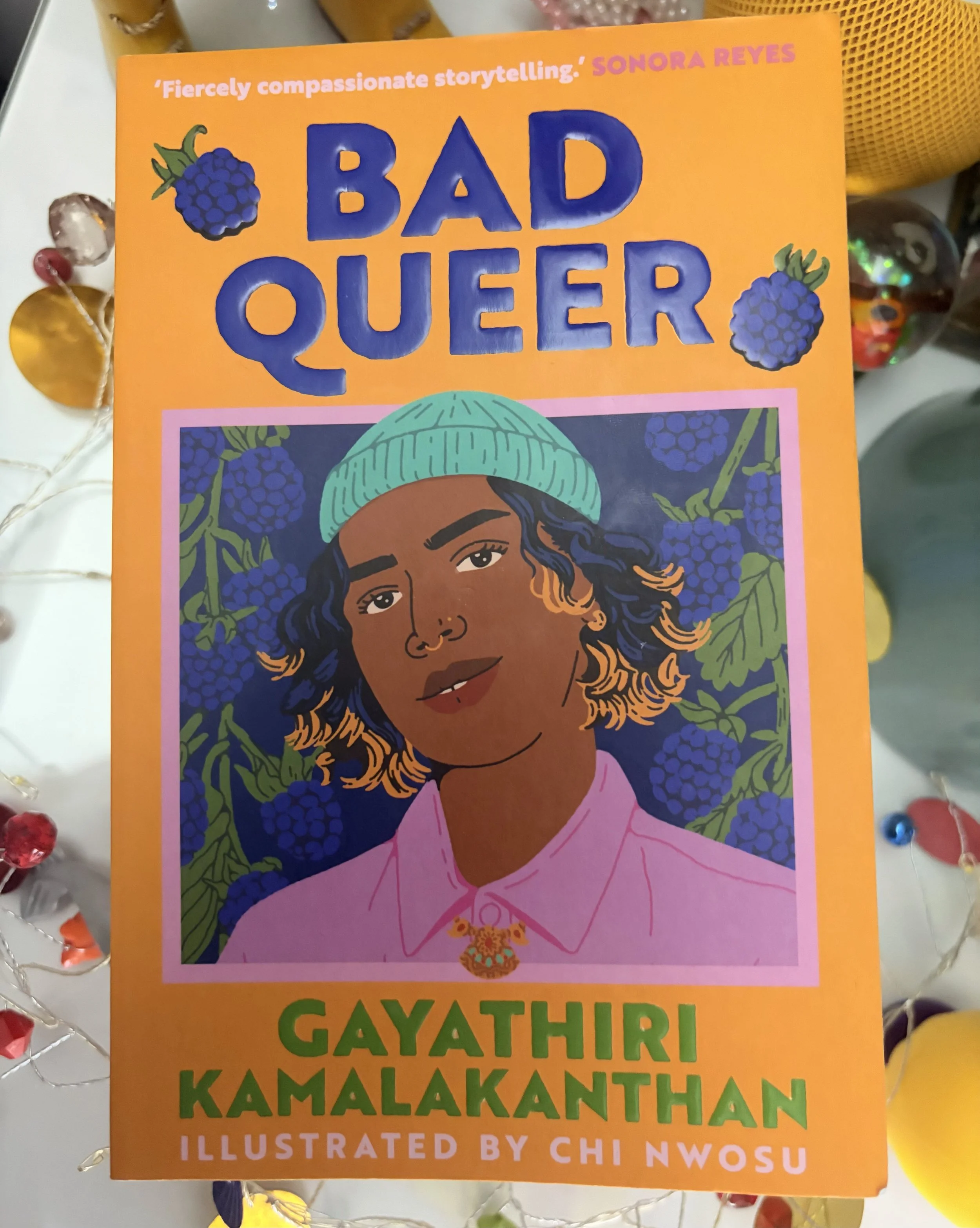
Surya is non‑binary, but falling for Blessing complicates everything as they begin to wonder whether he truly sees them, or just an imagined version. As their final school year unfolds and friendships shift, Surya must navigate first love, identity, and the desire to be understood.
Gayathiri Kamalakanthan has written a deeply moving story through poetry. The short stanzas make for a quick read, but never at the expense of emotion. Kamalakanthan can make three words feel as powerful as a full sentence in a prose novel, and because of that, I’m sure this queer story will resonate with every reader who picks it up — or is about to.
Now, I finished this in about a day and a half, though I technically started it a month ago. The silly little break I took was because I’m a hardworking student at university writing my own stories for very serious deadlines… so I apologise for the delay in my reading. But when I picked it back up, I thought: what better way to start my 2026 summer reading journey than with a queer book that aligns with June’s purpose — to shed light on queer communities across the world, better known as Pride Month. So, happy Pride to all, and I hope this review is useful.
First things first: this is a good book, no doubt about it. However, I’m only giving it three stars. For many reasons — the first being that I did not like the protagonist, Surya. They made a lot of good points that I’ll stand by forever, but they also got on my nerves quite a bit. They often came across as selfish, and at times — particularly in their relationship with Blessing — a little forceful. Not aggressively so, but in a way that someone might not even realise they’re being.
This book is about identity, navigating love, and being free and curious about it all. But I felt that message was contradicted when Surya confessed their feelings for Blessing and put him in a pressured position where he had to reconsider his own identity to accommodate theirs. Not that Surya wasn’t understanding, but I don’t think they gave Blessing much space to truly consider the situation. Especially since Blessing knows he’s a straight cis man; and having Surya remind him that they’re not a girl, so this wouldn’t be a straight relationship, felt a bit forceful and unfair — particularly when he clearly showed hesitation. And unfortunately, from experience, I don’t think telling someone they could be something else when they’re sure they aren’t is ever a good idea. So yes, that annoyed me and gave me a negative outlook on the protagonist — and the protagonist is supposed to carry the story. When you don’t like them at all, it becomes harder to enjoy the book as much as you might have if they were a little more likeable.
That isn’t to say it’s entirely a bad thing, though. Flaws are desperately needed in characters; without them, a story becomes less believable and lacks depth. Kamalakanthan did a good job creating a character who feels very true to certain people today, both in their queerness and in their very human actions and motives.
The second reason for this three‑star rating is the dialogue. At times, it felt like full, well‑crafted speeches rather than natural conversation, which gave it an unnatural and emotionally distant tone. Perhaps this is due to the poetic structure — and if so, it makes sense stylistically — but it doesn’t change how that style affected my reading experience. It made the characters feel a little robotic.
And finally, the thing that bothered me most was the ending. Personally, it didn’t feel like an ending at all. It cuts off mid‑dialogue and leaves you on a cliffhanger you desperately want resolved but are forced to imagine it instead. It simply stops, and the result feels incomplete which is disappointing, considering how strong the overarching storyline was. The final page certainly didn’t do it justice. And I know that alone might be a make‑or‑break point for you. Honestly, if I’d known the ending was going to be below par, I probably would’ve skipped the whole thing myself. So there’s no judgment from me if you no longer have any intention of reading this now, though, like a lot of things in life, you don’t know until you try…
Overall, the story feels emotionally heavy while you’re in it, but once it ends and you reflect on its themes and scenarios, it’s actually quite a light book to hold — not a lot truly happens. It’s definitely a character‑driven story, fuelled by feelings and personal choices rather than major, action‑packed plot twists. So if you like easy‑paced, relatable, heartfelt stories, Bad Queer might be for you. It’s different, and it sheds light on a topic that doesn’t get spoken about often, yet it’s beautifully presented through poetry that flows — sometimes in concrete form too — so you’re taken on a journey through exactly how Surya is feeling in every moment of each scene. It’s illustrated as well, which helps bring the story together visually, and that I really enjoyed. It’s colourful, full of life and culture, and because we’re celebrating a very important time of year, please do my little writer heart a favour: buy it, read it. You’re not only educating yourself on a complex queer experience, but you’re also supporting a queer writer (Gayathiri Kamalakanthan), and creating something this honest is both brave and deeply touching.
Buy your copy of the book here: https://amzn.eu/d/07FQBq2V
The Secret History - Donna Tartt
A group of college students fall under the spell of their classics professor and pursue a more intellectual and superior way of living that ultimately pushes them past moral boundaries and into danger.
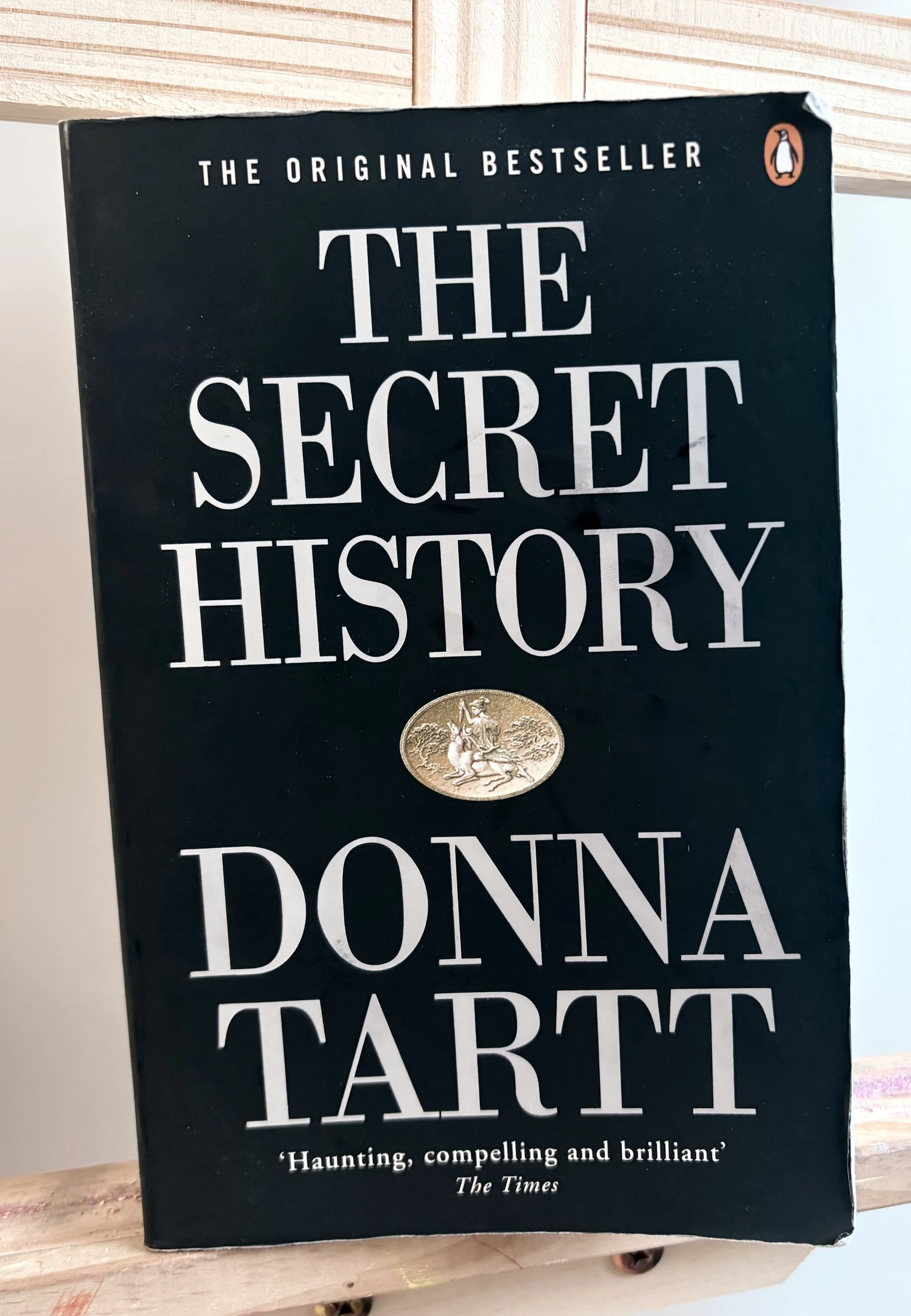
Right. This is a first for me, and hopefully a rare occurrence — or ideally a never‑again — kind of situation.
I started reading this book two and a half months ago, and I’ve finally decided I don’t want to read another page of it. I’m 131 pages in, and I feel like I’ve wasted countless hours wandering through a world I have absolutely no emotional connection to. It’s flat. And when I say this book is boring, believe me… it’s boring. However, I’ll warn you now: I can’t speak for the entire book because I haven’t even made it halfway. So everything I’m saying comes from what I have read; and if that’s any indication of what the rest contains, the climax and ending don’t look hopeful.
I love the dark academia genre; If We Were Villains by M.L. Rio is one of my favourite books. It’s thrilling, intriguing, and genuinely captivating. Because of that intense fondness, I naturally assumed Tartt’s novel would give me something similar. Instead, I’ve been met with disappointment of the highest order, in case that wasn’t already obvious. I’m so disconnected from it that there’s a steel wall between me and page 132, and I have no desire to break through it.
Initially, this surprised me. The Secret History has so many glowing reviews; I don’t think I’ve ever seen a novel so universally praised, and after my experience, I genuinely don’t understand why. Maybe it’s because I’m not into Latin, Greek, or anything to do with “classics”. But why should that make me hate a novel this much when it’s written in contemporary prose, and only touches on those classical elements? It’s not like I’m reading Shakespeare or Frankenstein, where I have to concentrate on every clause just to understand what’s happening.
It’s a modern classic, easy to follow, with a supposedly dramatic narrative… if you’re into dry storytelling that feeds the reader information you don’t necessarily need, that is. The protagonist spends pages rambling about things I can’t even identify because I must have mentally checked out. I’m none the wiser about the plot, and I dread to think how much more I’d have to endure before reaching the “200 pages of excitement” someone mentioned in their one‑star Goodreads review. And even if that’s true, I don’t have the energy or motivation to wade through the four hundred pages surrounding it. To me, that’s ridiculous. A book should enthral me from start to end, not from page 400 to page 500-something. In my book, that’s a lousy story.
Then again, maybe this is more up an English literature student’s street — and that’s fine, whatever floats your boat. But this certainly isn’t the novel for me. It’s too slow, the characters are bland and a little stereotypical (but in a muted, uninteresting way), and i’ll repeat: I’m over one hundred pages in and nothing has happened. I’ve literally only read two chapters; not even that. That alone makes me want to scoop my eyes out with a plastic spoon. It’s long, and for what reason? I haven’t learnt anything that makes me want to turn to the next page. So what’s the point?
The fact that I can’t bear to read any more is genuinely shocking. I never give up like this. I read things so you don’t have to — but with this one, I’ve tried it, I’ve hated it, and now I’m sharing it; unfinished or not. Unfortunatly, I’ve hit a wall, and I’m in desperate need of something that’s actually good for both my downtime entertainment and fuel for my own writing. Reading is my jam, and this book has put that hobby on hold for far too long. It’s sad.
With all that being said, the rest of the book might be great, and you might think the world of it, and you wouldn’t be alone. But I’m not alone in feeling the way I do either, and I’ve been completely put off. I’ve tried my best to convey that above, and i hope that some if not all of it, speaks to you. If you didn’t enjoy English literature in school, or you’re not a language‑learning fan, or you don’t like dark academia, or you’re looking for your first dark academia read… don’t pick this one. There are far better stories to dive into than The Secret History. It’s not worth it.
And on that terrible disappointment, never fear, I’ll be starting a new novel today — hopefully one that earns a much more positive review.
Buy your copy of the book here: https://amzn.eu/d/0edXPqjB
Before We Were Innocent - Ella Berman
Two former best friends who were once suspects for their friend’s death are forced to confront their past when a similar crime pulls them back together a decade later…
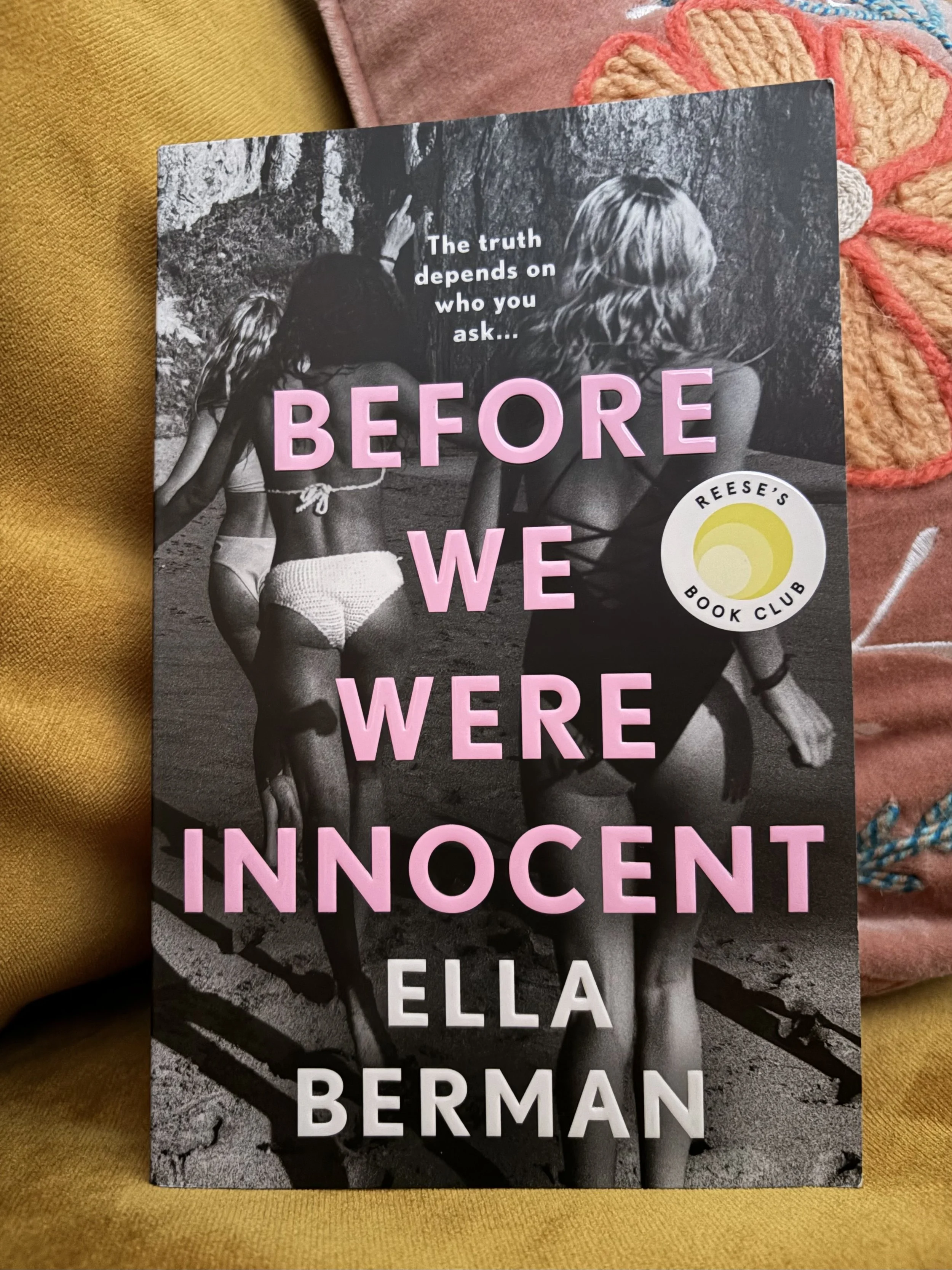
Two former best friends who were once suspects for their friend’s death are forced to confront their past, when a similar crime pulls them back together a decade later. As Joni becomes entangled in new accusations, Bess must decide whether to protect her old friend or finally face the truth about what really happened in Greece all those years ago.
Before We Were Innocent is nothing more than a three‑star read. I didn’t love it, but I also didn’t hate it, and there are a lot of reasons that led me to that middle ground. First of all, the beginning felt messy. Ella Berman wrote two parallel timelines: the present day in 2018 and the past in 2008. As you read, each story unfolds, but they don’t necessarily intertwine very well. This made it confusing to follow during the first chunk of the narrative, and that had me setting a low standard for the rest of the novel.
Though I felt this way initially - and it did sort of ruin the first part of the book for me - I think as the story went on, it started to make sense and was definitely necessary for the reader’s general understanding of what was happening. With that said, maybe Berman didn’t start the story in the right place, or perhaps it would have worked better with a prologue followed by the flashbacks starting at a later point in time. Some of the information in the first few pages wasn’t all that impactful and was extremely hard going.
Subsequently the story was quite flat, and because it wasn’t very eventful but very informational, it just wasn’t that exciting. Most of the book felt like it followed the rule of “tell, don’t show” rather than “show, don’t tell,” and that affected my attention span. When I’m reading, I want to be gripped from start to finish and while I was mildly interested in where the story might land, I wasn’t profoundly engrossed or on the edge of my seat at all. Its lack of exhilaration made it predictable, and I ruined the ending for myself by the midway point.
So, if you’re any good at solving murder mysteries, I’d steer clear of this novel because you won’t get the thrill you’re looking for. Yes, the narrative took some unexpected turns, but they weren’t jolting revelations; more like anticlimactic swivels in a direction not far from what I’d already predicted. Hence why it felt uneventful and a little boring.
Furthermore, losing myself for a week in a world that wasn’t mine was nice, but overall it’s a very fair-to-middling novel without much depth. However, despite all those negatives, there were some positives that I genuinely loved finding throughout the story. Before I list those, I want to make sure I state that Before We Were Innocent definitely succeeds when it comes to addressing societal issues, people’s behaviour, the media, and so much more. The story thrives on its underlying messages and themes to its audience.
Berman explores the complexities of toxic female friendships, the impact of adolescent trauma, the destructive power of secrets and memory, and themes of guilt, betrayal, maturation, and loyalty. This is where the book is both powerful and relatable. I mean, its relatability was the soul reason I kept reading. I was drawn in by relationships that reflected a lot of my own past friendships and romantic experiences. It highlights just how cruel girls can be, and subtly steers young women away from behaving that way; not just with female friends, but with anyone.
This was particularly good to me because as women, we sometimes forget there are healthier ways to communicate than through our insecurities and jealousy. It’s okay to have them, and feel it, but it doesn’t excuse you from being nasty. Berman shows exactly what happens when we act when our emotions are clouding our judgment; it’s heartbreaking, immature, and silly. To see these interactions play out on the page, strengthened my connection to the characters. I knew exactly whether I liked them or not, and exactly why that was. And these themes need to be spoken about because they reveal the ugly truth to people who don’t want to believe they act a certain way. Whether that’s being petty, or rude.
To conclude, considering its core messages, I’d recommend this book because you might learn something from it. Even if you don’t, you’ll definitely find some aspect of it relatable, even if the writing and story aren’t as strong as they could be. And if it really doesn’t tickle your fancy, then rest assured, you wouldn’t be missing out.
Buy your copy of the novel here: