The Lost Passenger - Frances Quinn
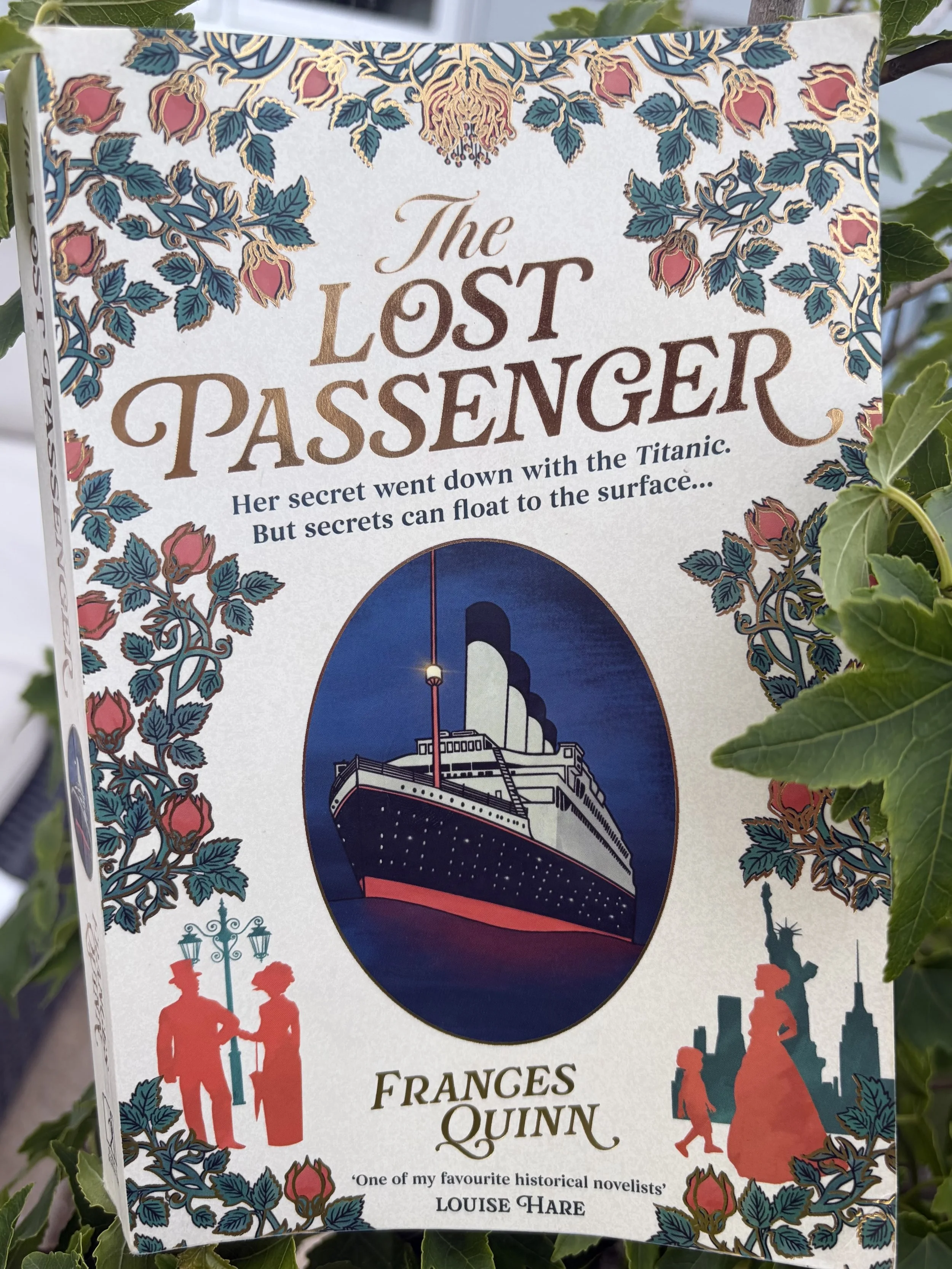
Elinor Coombes escapes her oppressive marriage by boarding the Titanic, but when the ship sinks, she seizes the chance to reinvent her life by letting the world believe she and her son died. Now living under another woman’s identity, she must navigate poverty, protect her child, and keep their dangerous secret from resurfacing.
This is a book about class and misogyny, bravery and resilience, a world‑changing historical event, and the harsh truth behind keeping secrets too big to be kept. I liked it — but I didn’t love it.
Anyone who knows me knows that I’m a massive fan of James Cameron’s Titanic, partly because I’m a little history buff about it, but also because of both its fictional love story and its devastating depiction of the real disaster that occurred on April 14, 1912. (If you’re unfamiliar with this event, I strongly advise doing some research and perhaps watching the film.) But more importantly, I suggest reading this book — and any other that covers the tragic scenes of that night. One: it’s fascinating. Two: you’re in for a truly emotional ride so you’re gaurenteed a bordom free read. Three: it’s a story that should never be forgotten.
In The Lost Passenger, Frances Quinn has spun her own version of that unfortunate night in a simply written prose novel that serves as a gentle reminder of Titanic’s story, sandwiched between the narrative of her character Elinor Coombes — and that story is compelling in its own right. However, Quinn’s writing style was not to my taste. I found it flat, and apart from the extremely short portion of the book that actually covers the Titanic’s sinking — which was disappointing too — it felt uneventful and anticlimactic.
There were some genuinely hair‑raising scenes that bring the narrative together, but she let them down by giving them a lack of excitement, thrill, and real sense of danger. Most things turned out to be fine in the end — initially presented as deeply detrimental but resolved very quickly with zero consequences — leaving many scenes underwhelming. Quinn also relied on a lot of cliché metaphors, similes, personifications, and idioms which were effective but not overly engaging, and this didn’t give the novel much depth — hence me calling it a “simply written prose novel.” And before you come at me, I know it sounds mean, but her writing was pretty basic. It was readable, with a few scenes sprinkled throughout that got me reading quicker, but the prose surrounding said scenes were drawn out and boring. So I wouldn’t say The Lost Passenger is an enthralling read, it’s just a nice read for if you don’t want to rush, and are interested in what life was like back in the early 19th Century.
With that said, Quinn’s knowledge and the research she put into executing this book were excellent. I could tell she cared deeply about the subject she was writing and was passionate about getting it right — creating characters who felt real, and depicting locations as they genuinely were. And I do like a good historical novel — it completely removes you from modern‑day shenanigans and places you in a world you’ll never get to go back to, but one that did, at one time or another, exist. This is, of course, bearing in mind that it’s a realistic historical novel and not, say, a fantasy set hundreds of years ago in a fictional country like Game of Thrones. So, I think Quinn deserves a lot of praise for her handling of that genre. It’s stunning work, honestly.
If you’re a historical‑novel fan, you should absolutely give this one a go — even if it’s solely because you’re interested in the history behind it rather than the story of a headstrong woman navigating a life she hates, all the way through to one that feels foreign to her but so right for reasons I’ll let you decide are justified or not. You may just find yourself in a silent battle with Elinor, but isn’t that what makes a book just that little more capivating?
Even though I say that, and that in itself sounds positive, I’m going to leave this book at a solid three stars. I don’t think I’ll reread it anytime soon, but it was a different kind of escape from what I’m used to, and it offered a good story with strong messages — and in a novel, that’s all I really ask for, for it to be considered good on my book-o-metre. Though, if you prefer more vivid imagery, something a bit more poetic and unique, I wouldn’t pick this up just yet. There are far more historical novels in the ocean; you’ve just got to look — as will I while I embark on my next read!
Do what you will with this one, and enjoy it… it’s lovely, really.
Buy your copy of the book here: https://amzn.eu/d/02toTbcW