
Book Reviews
Exile - Aimée Walsh
Fiadh has lived in Belfast her whole life. She’s got friends, plans for the future, and most of all, she loves to party. So when she comes home for Christmas after a long trimester at university, a night out with them goes horribly wrong. There’s just one issue… she can’t remember what happened…
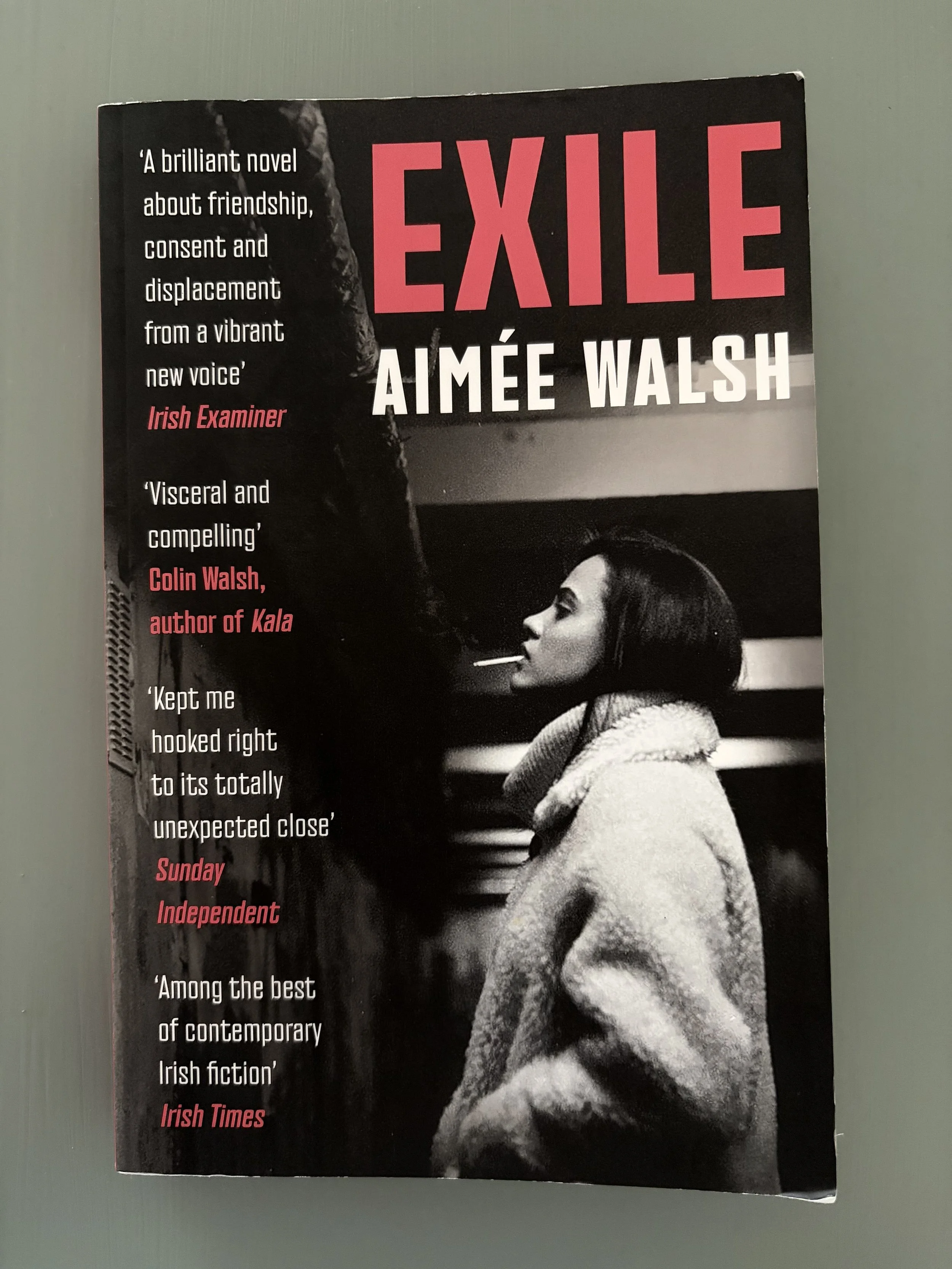
Fiadh has lived in Belfast her whole life. She’s got friends, plans for the future, and most of all, she loves to party. But when she moves away, everything changes. She doesn’t fit in, she drinks all the time, and her friends back home have moved on – or at least that’s how it feels to Fiadh. So when she comes home for Christmas, a night out with them goes horribly wrong. There’s just one issue… she can’t remember what happened…
With only the aftermath to help her piece together the events of last night, Fiadh begins to spiral. She’s bruised, achy, bleeding, tired, hungover, and nobody seems to care. Will Fiadh ever come to terms with this, and will she be able to turn her life around to start over? To that, I say: read it. Read immediately, quickly, and right now, because I can say without a sliver of a doubt that you’ll find it too intriguing not to.
Aimée Walsh has written a knockout. This is a great novel, and I couldn’t recommend it enough. It’s an extremely gripping read, and so wonderfully poignant that I didn’t know what to do with myself each night after reading it. It left me worried for Fiadh. It left me excited for Fiadh. It left me sorry for Fiadh. And it left me angry for Fiadh. Let’s just say it was one heck of an emotional rollercoaster.
Walsh implements short sentences to maintain a thrilling narrative that is fast-paced, shocking, disturbing, and exciting. These traits are what make the plot so compelling. It’s punchy, and really quite frightening but this approach works well with how Walsh has structured the story. Though the horrific night out isn’t introduced until around page 100, which was slightly bothersome. Despite that, the choice of sentence structure ensures that every word before it matters, making this a profound page-turner. It’s the build-up that kept me reading, eager to discover how the protagonist ends up in this so called awful situation. I’ll say it now and keep saying it: every word, phrase, and clause is worth reading.
However, if I were Walsh, I would have started with the night out in chapter one to immediately hook the reader. Initially, I was teased into thinking that was exactly how the book would begin, but the night out in the first chapter wasn’t the one mentioned in the blurb. While this was a bit disappointing, each page offered a tense build-up of events that kept my eyes glued to the page. The blurb certainly enticed me, and it is in fact what many people judge a book by. In this case, it did a good job of convincing me to make the purchase, and I hope it has the same effect on you.
I didn’t anticipate the story unfolding as it did, and I appreciated the unexpected turns. That’s what makes a good book. Predictable novels are boring. I want to constantly be asking, 'What happens next?' and piece together the story myself, guessing the outcomes of events and questions that arise. 'Who did what?' and 'What did he or she truly do?' I want to wonder if the next chapter will offer explanations, but I don’t want to know everything in advance. Walsh has executed this balance nicely.
I’m captivated by her writing style too. She’s descriptive, with cool similes that have inspired me when writing my own. And while the use of short sentences might be quite abrupt, the way she’s incorporated this is perfect. Her characters feel so real that I experienced the emotions a close friend of Fiadh’s would have. I wanted her life to be good and for her to be happy. At times, I questioned her morals, but that’s acceptable because she had flaws, which give characters a relatable human complexity. Every attribute in this book, from the plot’s structure to the minor details of each character in Fiadh’s life, fits seamlessly with the mood of the story and the genre of her novel: a coming-of-age story unlike any other.
I'll warn you now though, it's dark and frankly repulsive at times, but it's a story that felt so real that I was angry for most of the last half. Honestly, it’s a whirlwind of goodness, a devastating whirlwind of goodness, but I’m so glad I read it. It was satisfying and “visceral,” as author Colin Walsh also states in his review. It wasn’t tediously long either; it was the perfect length for a quick week long or few day read, depending on how much time you have to spare. So, if a deep dive into consent, friendship, and alienation is something you wish were written about more and would like to read, then I think Exile is the novel you need to get next.
Buy your copy of the book here: https://amzn.eu/d/gOwfPiw
Spellbound - Georgia Leighton
Briar and Talia were separated at birth, brought up in two completely different worlds; their lives turned upside down by the evil sorcerer’s spell. A spell that was cast the day they were born and are bound to until just before their 17th birthday. There’s nothing they can do, and nobody who can reverse it. Will the spell ever be broken? Or will the cursed Princess lose her life because envy overpowered the sorcerer’s mind?
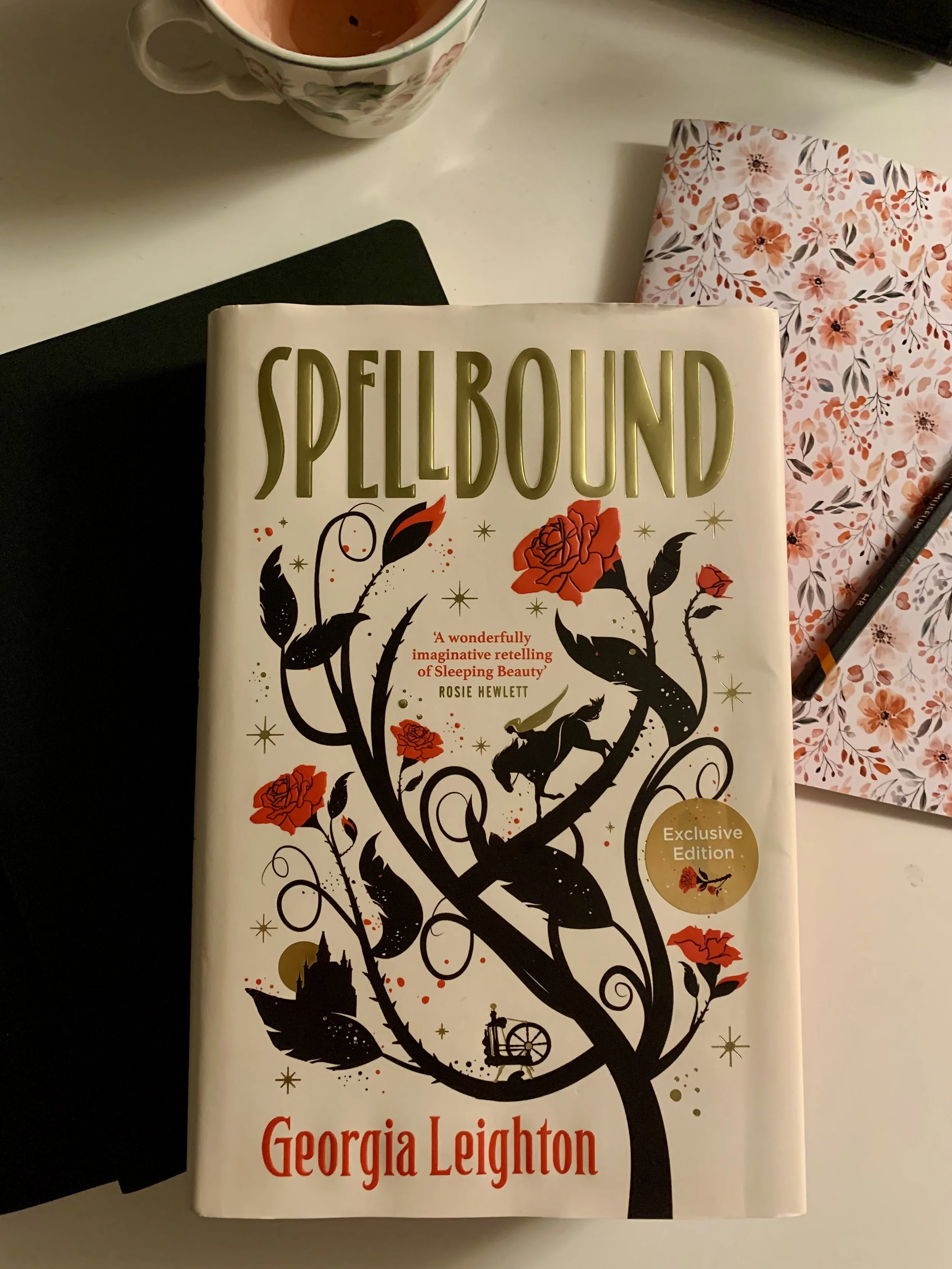
Briar and Talia were separated at birth, brought up in two completely different worlds; their lives turned upside down by the evil sorcerer’s spell. A spell that was cast the day they were born and are bound to until just before their 17th birthday. There’s nothing they can do, and nobody who can reverse it. Will the spell ever be broken? Or will the cursed Princess lose her life all because envy overpowered the sorcerer’s mind?
If you’re wondering what the answer is to those questions, this book will most certainly provide you with the answers you’re looking for. "Spellbound" offers a unique retelling of Sleeping Beauty, filled with interesting twists and a contemporary take on the roles women play in fairytale narratives. Unlike traditional tales where the prince saves the day, Georgia Leighton empowers her strong female protagonists to face their fears independently, with love interests serving merely as confidants. While romance may blossom, the Prince isn't the solution to their problems, which feels refreshing in today's world. However, I’m a sucker for the classic fairytales and I do prefer it when there’s a little excitement involved when the prince and his love life are concerned.
Now, this is a good book, but it’s not a breathtaking fantasy. It’s got me giving it a solid 3 stars and you’re about to find out why. The story is sweet, comprehensible, and well-written, and I particularly enjoyed the passages that involved the princesses Briar and Talia. They were lovable characters who carried the story and kept me engaged when Leighton’s metaphors, similes and hyperboles were a little too cliche and flat for my withering attention span. The princesses guardians on the other hand, bored me like the phrase "a web of lies” does - let’s just say, it’s used too much. And considering this is a retelling of "Sleeping Beauty," a story I've never been a massive fan of because I always found it a bit tedious and dull, I could feel reader fatigue hitting me hard. It felt somewhat bland, and the pacing was inconsistent. Major events would occur within one to three chapters, only four to six pages long, followed by extended periods of uneventfulness. During these parts, my reading pace slowed significantly because it was, well, boring. Nothing much happened until pages later, when a significant twist would appear, only to revert to another stretch of unremarkable story that sometimes felt inconsequential to the plot. And when I reached the grand finale, I was thoroughly disappointed.
The ending deviated significantly from the Sleeping Beauty we all know and love. It was anticlimactic, rushed, and lacked devastation, excitement, satisfaction. My emotions plateaued around Part Two and remained neutral until Part Six, where Leighton's beautiful, imaginative, and often unexciting story concluded. The final, pivotal scene happened so quickly that I wasn't prepared for the transition between climax/resolution and the very final closing scenes where every character is sent on their way to enjoy their happy ever afters. It was so short and snappy that I never fully registered that it was over; a feeling I've never experienced before. I wanted more. I wanted more pizzazz, destruction, with vivid descriptions of that destruction. Instead, it was the most uneventful eventful scene ever, if you catch my drift.
Aside from the narrative and the joy Briar and Talia brought to their chapters, the other characters lacked depth. Their mother annoyed me for reasons I can’t quite pinpoint, perhaps it was her personality and the things she said? And Sel, Briar's guardian, felt like an unfinished character with a lacklustre backstory. The castle staff and male characters - The King, Jacken, Gaddeus, and Hiberah - didn't have significant enough roles for me to fully engage with their so called lives. They felt ghostly, not fully present, which I suppose is Leighton's way of switching the roles of men and women in her modern take on this old-fashioned fairytale. She sidelined them to highlight the capabilities of the women she created. While commendable, nothing beats the original stories, where a lover saves the day but as the reader we’re unsure whether he’ll succeed or not, and without that anticipation, the story becomes less exhilarating. The princess could’ve been gay and I would’ve still wanted her female lover to save the day because that’s the kind of fairytale ending I’m used to and will unapologetically love until the day I die.
Overall, despite these flaws, it was a decent story, especially if you enjoy cool, innovative and spellbinding fairytale retellings. And if Sleeping Beauty was your favorite princess growing up, this is a novel you should start with. However, there are countless other novels by various writers out there; with different takes on stories that originally only ever had one version, and those versions still stand strong today. So it’s up to you whether you pick Leighton’s novel up, or perhaps you go for someone else like Robin Mckinley’s “Spindle’s End” or “Girl, Serpent, Thorn” by Melissa Bashardoust. I think it’s entirely down to whoever and whatever tickles your fancy. I know Leighton's book tickled mine, but it’s not until you read it that you discover what works and what doesn’t work. It felt long and uneventful for the most part, but when the plot twists occurred, I was yanked out of my seat and hurled into a world that's never been created before. Even though I was quickly thrown back out of it when the twist ended, I'd recommend this book with a mediocre amount of enthusiasm and a whole lot of love. Georgia Leighton seems like a lovely person, her book talks are fabulous and inspiring, and I can only hope she writes more! It’s different, wonderful, charming, and easy to read - if you’re not easily distracted by slow paced chapters - what more can you ask for?
By your copy of the book here:
Insatiable - Daisy Buchanan
Violet’s at a party she doesn’t want to be at but ultimately, she finds the one person who fuels her next chapter in life. Lottie is the reason "Insatiable" is a story; she’s the reason Violet begins her journey through various sex parties, a brand-new job offer, and a chance to become the person she’s always wanted to be
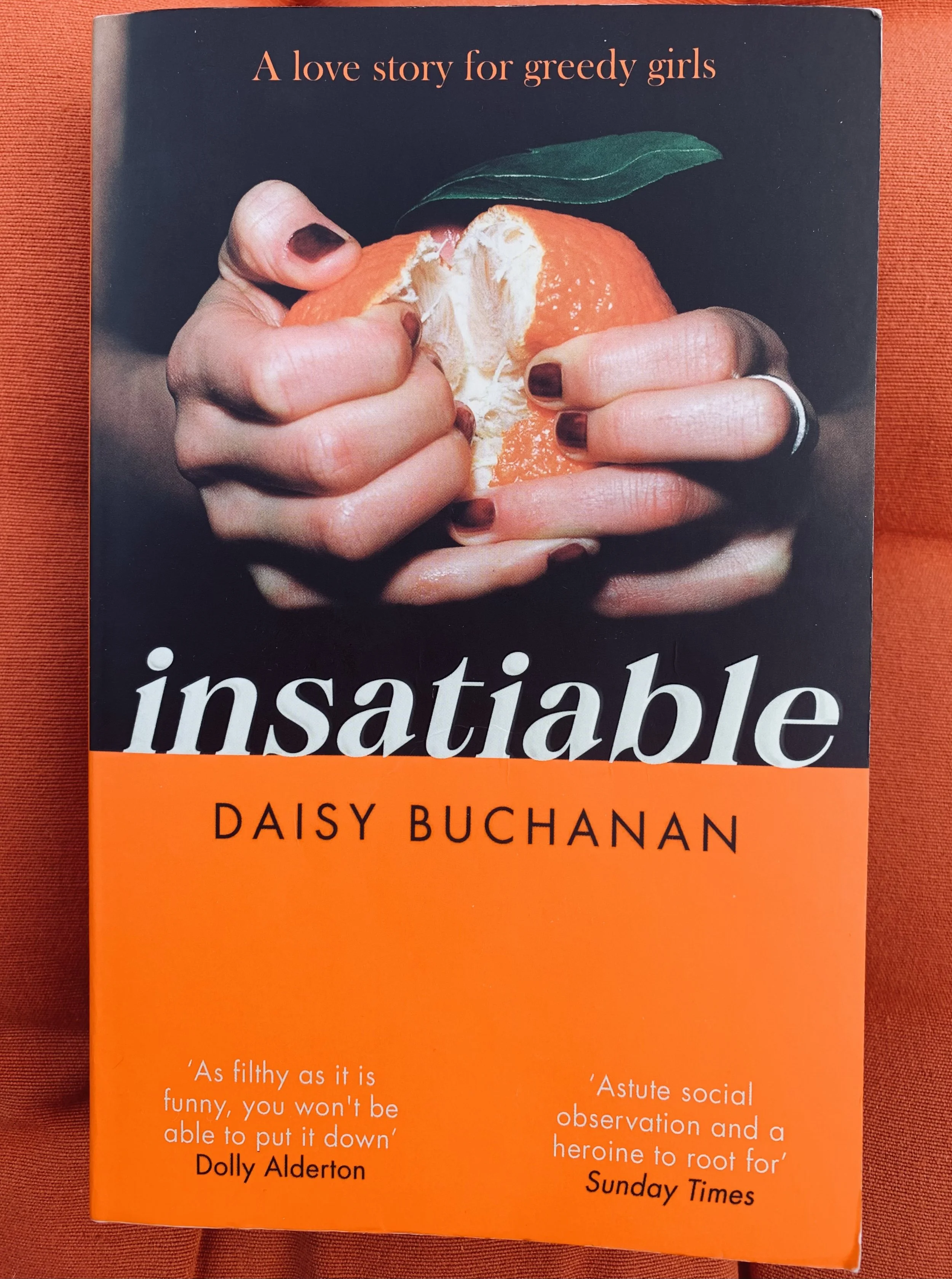
Violet’s at a party she doesn’t want to be at but ultimately finds the one person who fuels her next chapter in life. Lottie is the reason "Insatiable" is a story; she’s the reason Violet begins her journey through various sex parties, a brand-new job offer, and a chance to become the person she’s always wanted to be. It’s about greed and finding oneself in the darkest of times, but is the life Lottie offers truly what Violet wants?
I wasn’t 100% sure when I started this book, but now I know, and all Daisy Buchanan did was irritate me. I enjoyed the overall story arc and the events that unravelled within it, but I didn’t like a single one of the characters used to make the story happen. Violet, the protagonist, was so overly flawed that there wasn’t really any part of me that enjoyed reading about her and the life she was living. A lot of the time, I questioned her choices. Would someone do this in real life? Would a woman of her age say that? How can a girl in her position be so naive? Why is she always ignoring her better conscience? Gosh…it was annoying beyond belief, frustrating. She’d think one thing, one thing that I’d actually agree with, and then she’d say the complete opposite. I was also perplexed by her decision-making and was starting to question whether I could be friends with this woman if she were real. My answer to that is no, never.
I’ll give Buchanan points for making all her characters grossly realistic, but I hated all of them, and it kind of made me hate the book a little too. I couldn’t find a single ounce of love for any of them, and I haven’t had that with a book before. I wanted to whack some sense into them all, push some form of joy into their personalities, somehow. However, saying this, this could all be a sign of me disliking what the story was about as a whole. The novel was sexy, alluring, flailing in a sea of filth, don’t get me wrong, but I think it was that which made the characters unbearable. It was so dirty that their sexual greed was starting to become a little mechanical and unnecessary.
I know that this was what the book was based on entirely and that it’s all supposed to be part of the story, but - like I said before - it’s also the reason I didn’t love it entirely. I think it was too much and I would rather have read Violet’s story through a less sexual lens. I think the morals in the story might have been more powerful without all the sex shielding the themes, though Buchanan made it very clear that people have sex for all kinds of reasons, and hiding from the truth was one of them in "Insatiable." So, in a way, it was necessary for Buchanan to have written it the way she did; it just wasn’t my cup of tea.
Furthermore, Buchanan wrote a strong story from start to finish. Her writing felt real in terms of setting, as well as most of the dialogue and inner dialogue. I simply had some wholehearted dissatisfaction surrounding Violet’s actions. I also thoroughly disliked the ending; it was confusing, and I wish Buchanan had made Violet’s relationship with this older woman, Sasha, clearer throughout the story. I would have understood why Violet chose her in the end after practically saying yes to the option I begged her not to say yes to. It was vexing, to say the least and you’ll understand what I’m talking about if you take a leap of faith and read it.
All in all, I give this book 3.5 stars. If you’re into next level filth, then you’re going to have a blast with this one, but if you want characters that you can actually like and sympathise and connect with on positive emotional levels, then I’m afraid you might be heavily disappointed. Buchanan’s characters let me down, which let the whole story down, and that was saddening because it would have been a 5-star novel otherwise and I’d have been spared the let-down.
By your copy of the book here:
Sluts - edited by Michelle Tea (Featuring work by 36 writers)
"Sluts" is a collection of fiction, memoirs, poems, and essays diving deep into sex, especially queer sex. It really gets into what being a "slut" means and how that can be different for everyone, all while giving a shout-out to people's sex drives and unapologetic queer lives.
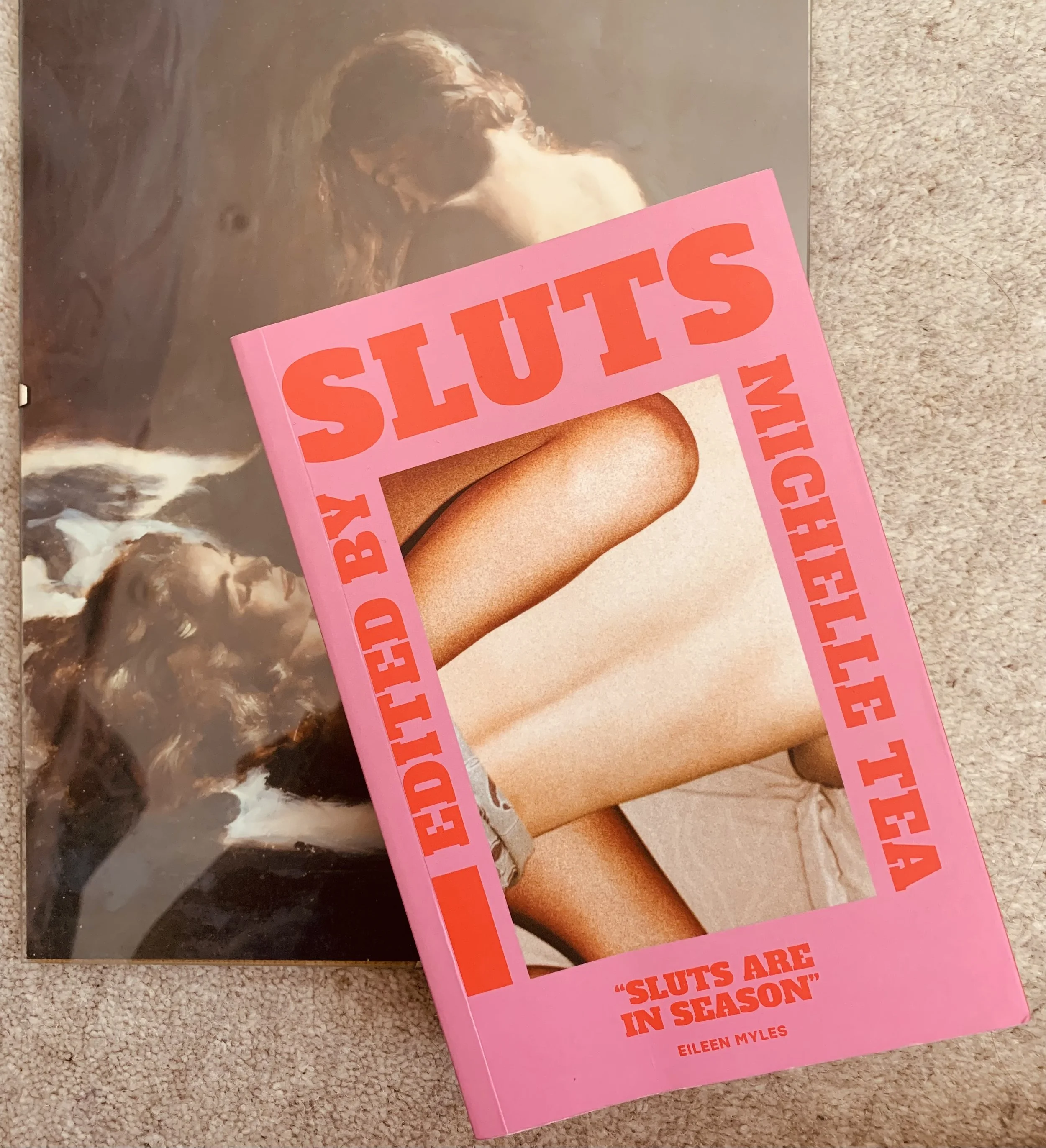
"Sluts" is a collection of fiction, memoirs, poems, and essays diving deep into sex, especially queer sex. It really gets into what being a "slut" means and how that can be different for everyone, all while giving a shout-out to people's sex drives and unapologetic queer lives. It throws you into the lives of tons of different people, from those awkward school moments to the tough stories of drag queens fighting for their place.
I was super into this anthology; it's as naughty and edgy as it is fascinating. Every story grabbed me, and I give credit to the writers who shared their own stories. I especially loved the lesbian stories and their focus on hot, real sexual intimacy. It was sweet, kinda dirty, but also reassuring. I don't usually read stuff that gets so real about queer sex lives, so "Sluts" totally opened my eyes to how I see sex and the fact that it shouldn’t be a shameful thing. Everyone's different, with their own limits and desires, and how intimacy brings people together.
Yeah, sometimes it felt like it was pushing it a bit, but maybe that's just my inner prude talking but it could also be really beautiful and erotic. So I wouldn’t argue if someone said that reading it in public might be risky, especially around family, but it's just a book; a book about something a lot of people see as taboo. And so if it's not your thing, don't sweat it, but I will say that it’s not just graphic; it also brings attention to queer stereotypes and the homophobia that's still out there. This book feels like something society needs because it drops some unexpected knowledge on you that’ll be sure to impact the way people live their lives.
There's so much to it that I wanted more. Some stories ended too quick, but the ideas were solid, with characters I loved to hate because they were so perfectly flawed. The settings felt real, unless the story was set in a cool dystopian country that was a nice change from the bog-standard world we live in as readers. That was another thing I loved; every piece was different. With different genres, voices, points of view, so it felt like I was reading a bunch of different books in one. That helped break up "Sluts," which is a hefty 448 pages, but still an easy read. I wasn't bored for a second reading about the same topic for a whole week, which is a win for books that are over 300 pages.
It's poetic, satisfying, sexy, and captivating. I'm definitely going back for a second round with some of the short stories; ones written by Gabrielle Korn, Chloe Caldwell and Lydia Conklin. This is a book you shouldn't miss, especially if you're a bit of a slut yourself. So, if you're into something a little out there or just want a break from your usual reads, "Sluts" is it. You can take your time with it, that's the true beauty of it; leave it for months and come back whenever and I doubt you'll hate it...or maybe you will, who knows? I can't say it's for everyone, even though I kinda did, but it's worth a shot.
Sluts features work by: DL Alvarez / Jeremy Atherton Lin / Vera Blossom / Chloe Caldwell / Cristy Road Carrera / Sam Cohen / Tom Cole / Lydia Conklin / jimmy cooper / Lyn Corelle / Jenny Fran Davis / Cyrus Dunham / Hedi El Kholti / Robert Gluck / Miguel Gutierrez / Gary Indiana / Taleen Kali / Cheryl Klein / Gabrielle Korn / Nate Lippens / Meredith Maran / Carta Monir / Amanda Montell / Carely Moore / Bradford Nordeen / Baruch Porras-Hernandez / Kamala Puligandla / Brontez Purnell / Liara Roux / Andrea Sands / Daviel Shy / Jen Silverman / Anna Joy Springer / Laurie Stone / McKenzie Wark & Zoe Whittall
By your copy of the book here: https://amzn.eu/d/28rVukJ
Colorblind - Siera Maley
When Harper’s strange ability to know the ages of people when they die reveals the devastating age of Chloe’s death, it drives a wedge between them and toys with their hearts in more ways than one. Can Harper stop Chloe from her inevitable death in less than three months, or will it all end in shambles, leaving Harper alone once more?
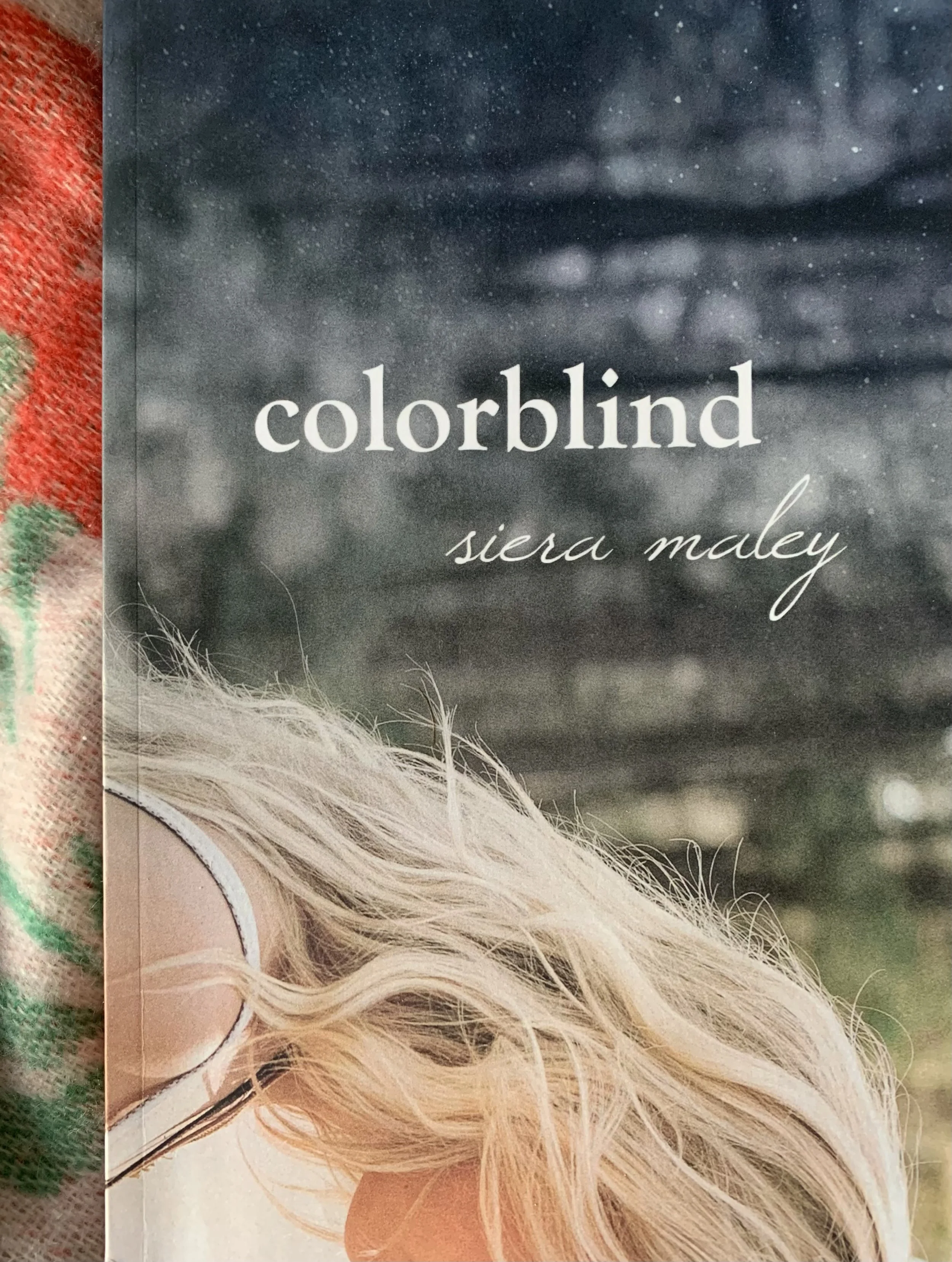
When young Harper Locklear crosses paths with the new girl in town, Chloe Stephens, Harper’s life is flipped upside down. They’re similar in age, but their outlook on life is poles apart. When Harper’s strange ability to know the ages of people when they die reveals the devastating age of Chloe’s death, it drives a wedge between them and toys with their hearts in more ways than one. Can Harper stop Chloe from her inevitable death in less than three months, or will it all end in shambles, leaving Harper alone once more?
Siera Maley never ceases to amaze me, however, this book definitely isn’t the better read out of the two books I’ve read of hers so far. A few years back I read Taking Flight and that quickly became my favorite novel of the year; and still is in my top ten without a doubt. Her writing was brilliant, every page of that book was realistic and every scene was addictive. Maley’s Colorblind was astonishingly good and just as addictive of a read, but I felt there were some areas within the story that I didn’t love and wanted to change.
My only real big issue with this novel was the dialogue. The girls are 16 and 17 years old, their age was presented well with each page that sped by, but I felt at times there were pieces of dialogue that were too cringey and not very realistic. It sounded both too old for what a girl their age would say, and too cheesy which created an awkward atmosphere that I wish I wasn’t being taken through. Though everything they did together, action wise, felt exactly like something a young teenager of those ages would do. So in that sense, I was able to relate to their enjoyments in life and them as characters in a fictional story.
It was simply the speech that was a little off putting, which surprised me because in Taking Flight Maley’s dialogue was on point. I didn’t have a single flaw to note about it. And because I’ve read this book, and recently too, I noticed the subtle differences between these books more so than I normally would. It makes for a good comparison essay!
Furthermore, I thought the story was lovely. So lovely and deeply thought provoking, I took inspiration from Maley’s main ideas and applied them to my own writing. Where she focuses on what life means, I focus on what death means and how to overcome the fear of it as it’s an inevitable part of life which nobody can stop. And Maley did a great job of making that point stand out in Colourblind through the advice and thoughts of girls who her targeted audience can learn from.
I understood her message, but still don’t quite understand the title. It bothers me very much. Harper isn’t literally colorblind, as far as I’m concerned, she can see everything including numbers imprinted on peoples foreheads indicating their age of death. So I’m not sure where Maley’s title came from, I might do some research into it but it does half annoy me when the title doesn’t click naturally. I love it when they suddenly make sense half way through the book, or at the very end. But unfortunately, it didn’t click for me at all and now i’m ranting about it and it seems a little ridiculous. But title is important and I want to know why she chose Colorblind specifically, it might help me understand her story’s message better. Or maybe I’d understand Harper’s character a lot more than I already do, she does feel a little incomplete having finished the novel entirely now.
I wish Maley addressed why Harper had this unnatural gift, and perhaps she could explain why her only friend, Robbie, too, could see these numbers on people. I’d like there to be some sort of reason for it, but it wasn’t entirely clear so I’m left guessing and a little clueless. I suppose I’ll just have to accept it for now, and leave all you lovely readers with this: Colorblind is a must read, but it’s not without its flaws so give it a chance.
I doubt it’ll be everybody’s cup of tea, but it recognizes young queer love, and states ideas surrounding the beauty of life and the fact that it’s a gift, not a life sentence. Whether or not you choose to believe that is up to you, but I’m sure Harper and Chloe will help sway your decision as the novel unfolds. It plucked at my heartstrings, and a novel that moves its reader is always a perk. What’s a story without emotion anyway? A blunt piece of writing that nobody ever finishes because it hasn’t captured its reader at all. It probably only has one or two stars as well, and that’s off putting enough without all the sad sentences and dialogue void of emotion.
So go and read it, then perhaps you can take a look at Taking Flight and see how you feel about the two and whether or not there’s one you prefer and why? I’d love to know, so drop a comment on my Instagram post related to this novel. In the meantime, I’m on the hunt for her other books, I need to know what they’re like too.
By your copy of the book here: https://amzn.eu/d/f0yIMAk
Our Wives Under the Sea - Julia Armfield
Armfield’s novel, "Our Wives Under the Sea," beautifully entwines a tale of love and heartbreak, focusing on two women whose bond is tested by a deep-sea mission that profoundly alters Miri’s partner, Leah…
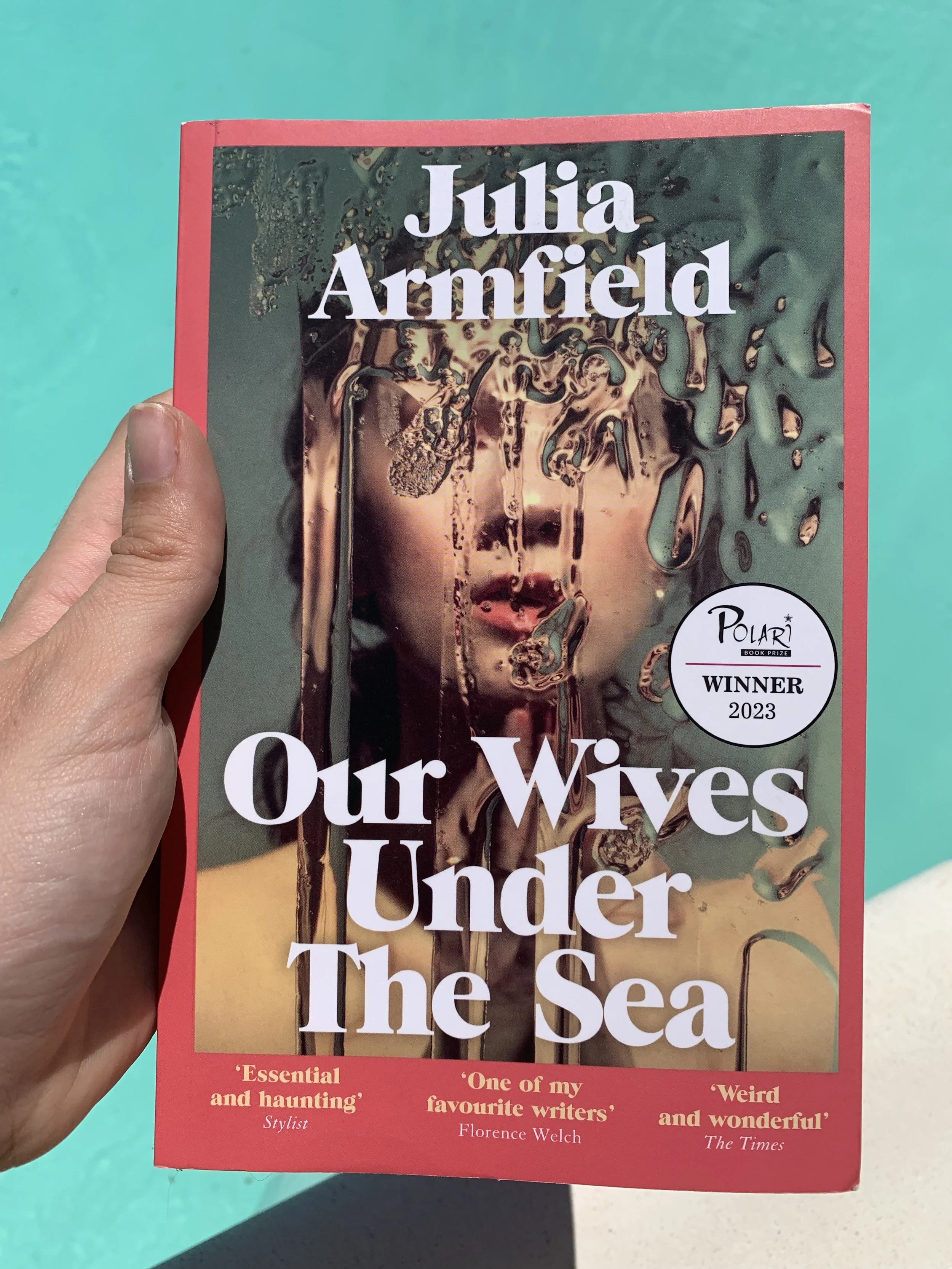
Armfield’s novel, "Our Wives Under the Sea," beautifully entwines a tale of love and heartbreak, focusing on two women whose bond is tested by a deep-sea mission that profoundly alters Miri’s partner, Leah.
What unfolds when Leah descends into the ocean's depths, and how does it ripple through their lives afterward? The story intricately explores the complexities of their relationship, subtly driving them apart as life inserts a wedge between them. To discover the journey this book will take you on, I wholeheartedly recommend reading it; it’s an experience you won’t regret.
Honestly, I was left utterly speechless by this book, mainly because I was emotionally wrecked, but also because Julia Armfield’s writing style completely captivated me. Her storytelling is so seamless and elegant that each chapter effortlessly flowed into the next; the shifts in time never once disoriented me. It was a thoroughly enjoyable read that kept me engrossed from beginning to end. I was deeply moved and genuinely astonished by her incredible imagination and applied research.
Initially, I questioned why The Times described it as “Weird and Wonderful,” particularly the “weird” aspect, but after finishing the book, I completely understood their sentiment. It was indeed weird, bizarre, and uncanny, but that’s precisely what made it so compelling. It was truly exceptional, and I can’t praise it enough. I loved how it delved into every facet of these women’s lives, from their initial meeting to the events unfolding both beneath and above the water. Everything intertwined seamlessly, creating the most potent and enigmatic narrative Armfield could have crafted. I’m craving another book just like it; in fact, I’m eager to read more. I need more, even though I found the ending satisfying and there’s quite a few novels out there with endings that i’d change. The ending of “Our Wives Under the Sea” was precise yet elusive, clear yet ambiguous, all at the same time, which thrilled me. I genuinely believe Armfield knocked it out of the park with this one. I’m so impressed that I’ll be rereading it amidst all the other books on my list.
Armfield’s characters were compelling and believable, so much so that I genuinely disliked some of them; and it’s been ages since I’ve felt such animosity towards characters in a life that doesn’t truly exist. Their thoughts were realistic, their actions understandable, and at times, frustrating. I honestly struggle to find any faults. Armfield crafted a disturbing story infused with the passion of love to ease the pain. It’s a true work of art, and I’ll be recommending it to others for a long time to come.
With that said, if the ocean captivates you, and you’re drawn to queer love stories or seek validation through them, "Our Wives Under the Sea" is the perfect book for you. It’ll only disappoint if you’re not a fan of realistic fiction, romance, or the concepts surrounding deep water exploration and the marine biology that comes with it…because yes, you’ll learn a thing or two, and it’s surprisingly fascinating!
So, if you haven’t already, go grab your own copy of the book using the link below and dive right in:
The Virgin Suicides - Jeffrey Eugenides
Jeffrey Eugenides’ first novel ‘The Virgin Suicides’ follows the tragic lives of five sisters who were the neighbourhoods greatest fascination…
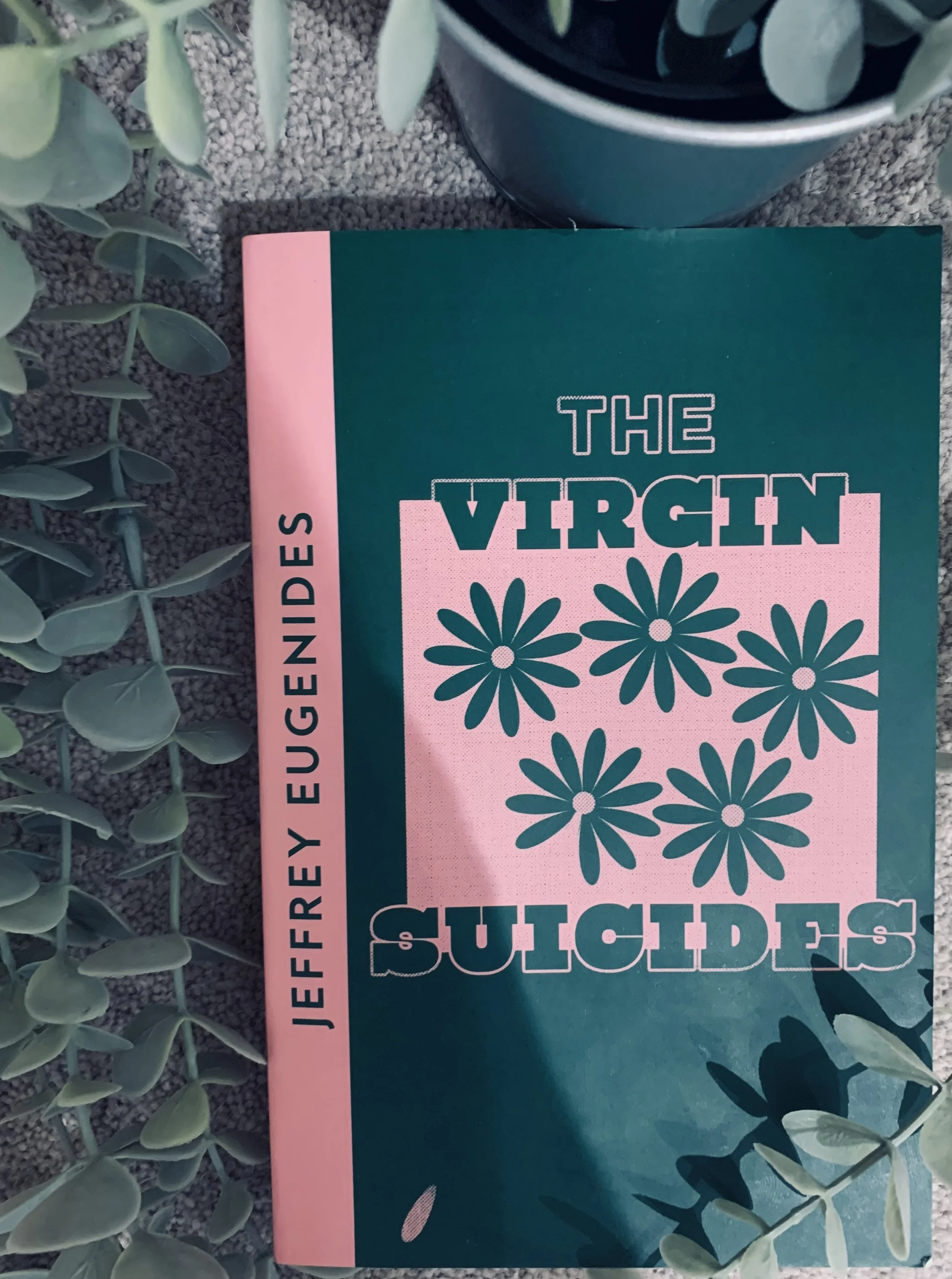
Jeffrey Eugenides’ first novel, 'The Virgin Suicides,' follows the tragic lives of five sisters who were the neighbourhoods greatest fascination. From sex to suicide, the Lisbon sisters’ story is told from their neighbours’ points of view—neighbours who kept a watchful eye on their peculiar ways and naturally alluring beauty, deeply investigating why they were all driven to such extremities.
It’s a marvelously written book from start to finish, and it deserves all the praise it’s received. Every sentence was written to perfection, every character felt elaborately created; it felt so real I had to check that it wasn’t based on a true story. Though, according to an article on Yahoo, the story “was inspired by real events after Jeffrey Eugenides came across an article mentioning a group of young girls from California in the 1970s who agreed to make a suicide pact.” And despite its brilliantly formed clauses and phrases, it’s probably the darkest story I’ve read, evoking emotions that I never thought would be evoked so greatly in my life (by a novel at least). He’s sprinkled it with humor and fueled it with information that everybody wants to know. There isn’t a single portion of this book that I felt shouldn’t have been there because I didn’t need to know it. I had to know it. I had to know everything, because just like the boys living on the same street as the Lisbon family, I had questions that I wanted the answers to.
I mean, the description was so powerful it was one of the aspects in this book that propelled me through the story, forcing me to finish it without skipping a single sentence. And there’s plenty of novels out there that I’ve tried to read and tried to enjoy but have miserably failed at doing because the description is too much and way too unnecessary. It’s boring, and I don’t like boring.
Eugenides captivated me completely. He not only raised awareness about an issue that devastates thousands of people today, but he’s brought to light themes of adolescence, repression, and the impact of societal expectations which surround the main idea. And so I found it to be a really riveting read. The plot was strong, which made each turning point in the book a distressing shock, which is the right effect to give as an author considering what the novel is about, on top of ending it the way it should be ended. You may argue with that, but I’m pleased with it. I don’t think it should be changed; not for the world.
I give this intense and delicate story five out of five stars. Every aspect deserves top marks, and I’d read it again just to see if I could piece together anything that I might have missed before. So with that said, yes, I would recommend this novel to almost everybody, unless you’re trying to avoid upsetting topics and sorrowful mysteries. Otherwise, read to your heart’s content. This is a modern classic that any death fanatic would enjoy. It’s intriguing and very eerie, “bold and resonant” from the Independent on Sunday, and intoxicating but not without its heartbreaking subject matter.
By your copy of the book here: https://amzn.eu/d/5LWvoUl
Sisters Under the Rising Sun - Heather Morris
When nurse, Nesta James, and English musician Norah Chambers find themselves on the Vyner Brooke, fleeing Singapore to escape the Japanese in Febuary 1942, disaster strikes the ship they’re on and nothing is the same again.

When nurse, Nesta James, and English musician Norah Chambers find themselves on the Vyner Brooke, fleeing Singapore to escape the Japanese in February 1942, disaster strikes the ship they’re on and nothing is the same again. Captured by the Japanese they have to find strength in places that make them weak, yet they stand united as one, lifting each other up as they endeavour a journey full of disease, exhaustion, starvation, and heartbreak.
This story highlights events of World War II that many people are unaware of. It focuses on Japanese prisoners of war, who were held for just over three years with little food and extremely poor living conditions. Many died, and many suffered the consequences of this prolonged period of deprivation for years after their release.
I was genuinely fascinated to learn more about this side of the war, and I was deeply moved by it. It broke my heart to read the true stories of two women who survived to tell their experiences to their children, who then passed the stories on to their own children. And eventually, writers turned these memories into novels that retell the events these people endured, in great detail.
Despite Morris's hard work on this novel, I feel her writing style let the story down by being too technical rather than descriptive. It felt very straight to the point, without much in the way of setting description or character building. While this directness might suit the topic and genre, it prevented me from connecting with the characters on a deeper level. Firstly, they didn’t feel real enough, and secondly, I didn’t have enough time to build a connection with them because I only knew about their jobs and immediate families - due to the lack of descriptive writing. The dialogue didn't offer much insight into their personalities, which is crucial in storytelling; the way someone speaks can reveal a lot about them, and this novel was missing that element.
However, the core story was strong. Morris clearly did extensive research on this topic, interviewing family members of the women involved, and she portrayed it all in a plot that likely closely resembled the actual events. I particularly appreciated the additional sections at the end of the story where Morris provides informative profiles of each woman she mentions, detailing what they did after the war. She also listed all the women in the Australian Army Nursing Service, including those who died. The photographs of the women were a great addition too; I found they helped solidify the characters I had just read about. In other words, the photos made each character feel more real. Having a face to associate with each name gave me insights into their personalities that Morris's character descriptions didn't provide.
I did really enjoy this read despite its flaws. It’s a novel that’s made me want to read her other books and I’m looking forward to the day that I do. Stories from the war are interesting to me, and if it’s a type of history you enjoy as well, I would highly recommend giving Heather Morris’s books a go. I found myself to be quite tearful towards the end of Sister’s Under the Rising Sun and it’s quite hard to get a tear out of me when a book’s involved, so I give her an extra star for that. She moved me with her words, and for a story like this, that’s all I ask for.
Buy your copy of the book here:
Station Eleven - Emily St. John Mandel
Disaster strikes when actor Arthur Leander dies on stage mid performance, and shortly after we’re introduced what ultimately ends everything: the Georgia Flu…

There’s an eeriness to this Emily St. John Mandel novel, an eeriness that creates a disturbing yet compelling atmosphere as we follow the journey of several different characters, through a period of time that I can only describe as the end of the world.
Disaster strikes when actor Arthur Leander dies on stage mid-performance, and shortly after we’re introduced to what ultimately ends everything: the Georgia Flu. It’s a story that’ll take you on an adventure of a life time and young Kirsten and the Travelling Symphony help carry that journey along. The world has collapsed, but Kirsten and her friends survive, what happens when everything they’ve built gets jeopardised, and what will people do to survive? Who escapes and who dies?And more importantly….what would you do?
St. John Mandel has written a fantastic story that’ll answer just that in her cleverly put together narrative and plot. It’s held together strongly with its well formed non-linear structure, keeping her readers on their toes as they enter each new chapter. And it’s certainly a new read for me. One that put me right out of my comfort zone. One that had me battling every page with all my strength.
Yes, it was one of the books I found harder to get along with. So I think it’s fair to say that this wasn’t my favourite novel of all time. I struggled to get through it but only because it was hard to follow, and not all that exhilarating. Though others may beg to differ, I found it a tiny bit boring. I needed more action and less explanation. Perhaps a little more dialogue too. Don’t get me wrong, there were parts that I absolutely enjoyed and would read again, but they were sandwiched between parts that I didn’t care for, which slowed me down and wore me out.
However, in comparison to Stuart Turton’s ‘The Last Murder at the End of the World’ (a book review I wrote a little while ago - go check it out) this was by far the better novel. The story was stronger, the idea felt a little more realistic, and I was genuinely twice as intrigued to know what will happen to both the characters, and the unexpected journey of the plot than I was with Turton’s novel. I’d pick St. John Mandel’s over ‘The Last Murder at the End of the World’ any day. Which is saying something, because yes, her book was a hard read, but she nailed her writing. She has talent, and that talent wasn’t wasted on me. I saw it and I’ll recognise it. I enjoyed her work, I just didn’t enjoy this story as much as I thought I might (Sci-Fi might not be my thing.)
But, if Sci-Fi, adventure, and apocalyptic novels are you jam, this book is guaranteed to be your new ‘Book of the Year’. It won’t disappoint, I promise. Her interpretation of this concept is great, it was cool and as George R. R. Martin said, “wonderfully elegiac”. I can’t argue with that. It was so popular it became a TV series and I’m yet to watch it. And I will as soon as possible because to see this beautifully developed world live, would be astonishing and extremely engaging. And though I strongly believe in the fact that ‘the books are always better than the movies’, I’ve read the book, but I need and must be enlightened by the live action version too. I want St. John Mandel’s story to come alive and make a little more sense in my head. Her book was intricately and clearly written, but I never said it was easy to follow. I actually found it a little confusing, and I think the TV show would help clear up some of my questions. There were too many characters in too many different places - location and time wise - what a mind boggle. So I’d recommend watching that as well as reading it, especially if you’re someone like me who found it to be a little tricky to get into.
Overall though, I’m glad I read it and I think you should too.
By your copy of the book here:
We Used to be Magic - Bea Ingalls
An entirely new world awaits Audrey who’s starting her career in modelling; new to the Big Apple, fresh from England. As she steers her way through this new beginning, experiencing the good and bad parts of the modelling world, she meets Ezra - a strapping young man trying to avoid his past…
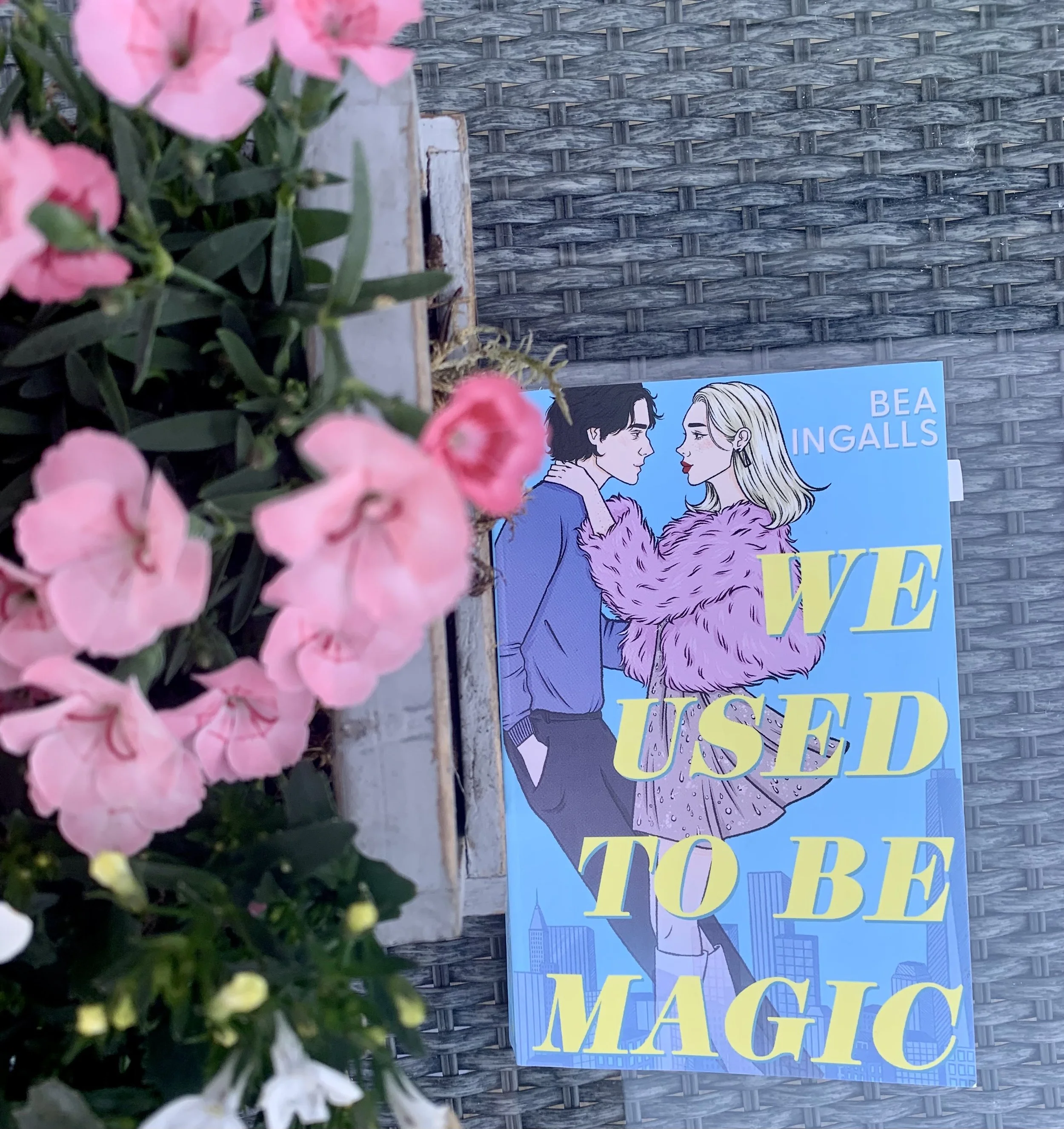
An entirely new world awaits Audrey who’s starting her career in modelling; new to the Big Apple, fresh from England. As she steers her way through this new beginning, experiencing the good and bad parts of the modelling world, she meets Ezra - a strapping young man trying to avoid his past. They’ve each got their issues, issues that try tearing them apart, but each time conflict erupts the universe attempts to pull them back together again.
It’s a simple love story full of emotional twists and turns, one that’ll have you questioning whether it’s a happy-ever-after or a story ending in sadness, tragedy, or disappointment. Will their darkest secrets hold them back from what could be considered fate? Or will fate be strong enough to keep them together?
If you’re as intrigued as I was, you’ll have to read it to find out. The 3.5 star story is totally worth it, but it’s not without its flaws.
Young adult romance novels aren’t my first choice of reading book. Personally I find them to be a little too cliche which, if you’ve read enough of them, it can feel repetitive, making it all a little boring. Of course, Ingalls’ story is original, unique, and well curated, but it’s been constructed around cliche ideas that I’ve definitely seen before. In other words, it’s quite banal. Certain scenes had me thinking: ‘this just wouldn’t happen in real life’ and ‘oh my gosh this is so cliche’.
They’re nice ideas, don’t get me wrong; it’s all very romantic, sweet, and quite cheesy at times but it doesn’t entertain me when things don’t feel uncommon and unexpected. I understand why people have a love for these stories though, it’s what people fantasise about for themselves. It’s a heartwarming day dream to have, but when it’s in a novel, I want it to feel realistic to life, and though most of this book did have realistic qualities, a lot of the concepts didn’t have me believing it all the time.
In fact, I wanted to roll my eyes at a few of the chapters in this book. They were simply written because ‘it’s what the reader wants’, like the scene where they kiss in the rain. Obviously it’s a super romantic idea; so much so movies like The Notebook, Dear John, Breakfast at Tiffany’s, Spiderman (2002), and Little Women have it as part of their stories. It’s a common clip that gets the audience emotional every time. But I’m sorry, it just doesn’t do it for me in books like Bea Ingalls’ - I prefer it when writers think outside the box, it’s too easy otherwise.
Not to mention the fact that I never once felt as though I was in New York while I was reading this and that was so disappointing. I don’t think I’ve experienced anything like it before. I felt that I was just a character floating in space. I might have been in an apartment building at times, but the outside was dark and placeless. The New York vibe wasn’t there at all, and to make matters worse, Ingalls had to bring in American stereotypes to reference the fact that they were clearly in America. One of those being when Ezra had to point out that Americans put butter on their popcorn. Sure, that’s a true fact, a lot of Brits enjoy that combination too, but she had to point it out which gave me the impression that even she felt she wasn’t portraying the location well enough. Especially as subtle lines like that cropped up a few times throughout the story. If I’m writing something, I shouldn’t need to bring up cultural statements like that to remind the reader of where I am, I should already get that vibe from description of the setting that’s interwoven throughout the story. Don’t specify that ‘yes’ this happens in America, just roll with it and the reader should get the gist. If they don’t, you haven’t done it right.
Despite all this, I thought it was a lovely story. No book is perfect, unless you deem it be of course, but I think every writer deserves praise for what they’ve accomplished. It brought up some very moving points, highlighting problems within the modelling world and male dominance, as well as alcoholism and the sheer emotions that heartbreak can conjure.
The characters, I felt, didn’t have many flaws apart from the obvious note to alcoholism and vulnerability on Audrey’s end, otherwise in every other sense I felt that they were too perfect. They made decisions that never once affected how I felt as the reader, and I think that’s why I didn’t connect with the characters on a very deep level. However, everyone is different, this could be the perfect book for you - especially if Rom-Coms are your passion. But if they’re not, then you wouldn’t be missing out too gravelly; though it would be a shame if you missed Audrey’s and Ezra’s whirlwind of a journey through their next chapter in life.
By your copy of the book here: